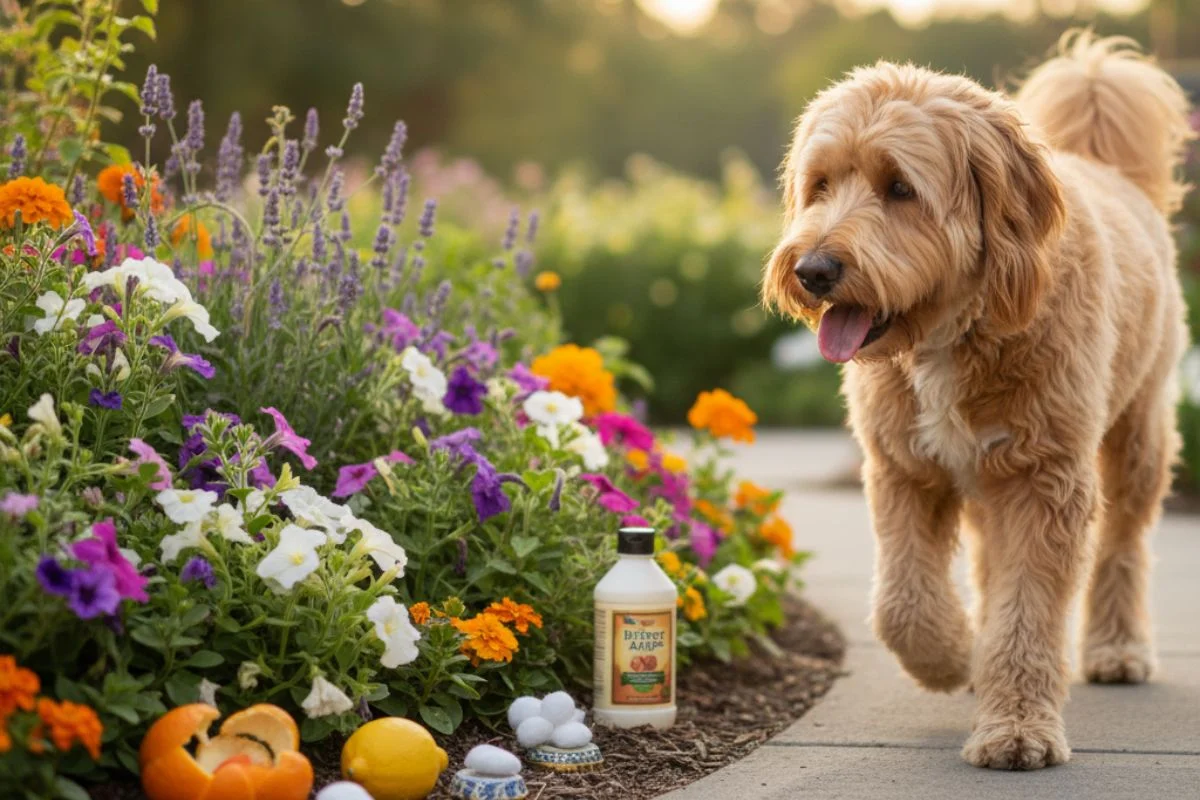
You’ve poured your heart and hard work into creating beautiful flower beds, only to see them trampled, dug up, or used as a nap spot by your furry best friend. You want to protect your plants, but the last thing you want to do is spray harsh, potentially dangerous chemicals in a space where your beloved pet plays.
This is a common struggle, but the solution is simpler than you think. You can create effective, natural dog repellents for gardens using scents your dog dislikes but that are safe for your family and plants. It’s all about working with your dog’s powerful sense of smell, not against it.
This guide will show you 5 of the best homemade and natural methods to protect your flower beds. We’ll cover safe, effective solutions that will keep your dog out and give you peace of mind.
A Critical Note on Safety and Effectiveness
Before we dive into the recipes and methods, it’s essential to set realistic expectations and prioritize safety above all else. A successful outcome depends on understanding these key principles.
“Natural” Doesn’t Always Mean “Harmless”
The term “natural” is reassuring, but it’s not a free pass. For instance, while cayenne pepper is a natural spice, it can cause significant pain and irritation if it gets into your dog’s sensitive eyes or nose. Therefore, it is crucial to use these repellents as directed, start with the mildest options first, and always supervise your dog’s initial interactions with a new deterrent. The goal is to gently discourage, not to cause harm.
Every Dog is Different
Dogs, like people, have their own unique preferences and sensitivities. A scent that one dog finds utterly offensive might be mildly interesting or completely ignored by another. As a result, what works wonders for your neighbor’s Labrador might not work for your Beagle. Be prepared for a bit of experimentation. You may need to try a couple of these methods to discover which one your specific dog dislikes the most.
Repellents are a Tool, Not a Magic Wand
Most importantly, think of these repellents as powerful training aids, not as an invisible force field. They are most effective when used to support a larger strategy of training, management, and providing for your dog’s needs. They help communicate a boundary to your dog, but they work best when combined with the other humane techniques we will discuss later in this article.
Our Top 5 Safe and Natural Dog Repellents
Here are our top five choices for creating a humane and effective boundary around your flower beds. We’ll start with the gentlest options first.
1. The Citrus Solution (Lemon, Orange & Grapefruit)

Why It Works: A dog’s sense of smell is estimated to be 10,000 to 100,000 times more powerful than ours. While we find the smell of citrus fresh and pleasant, it’s often overpowering and acidic to a dog’s sensitive nose. This makes it an excellent, gentle first choice for a repellent.
How to Use It:
- Method A (The Peels): This is the easiest method. Simply take the peels from your morning orange or grapefruit and scatter them around the border of your flower beds. This creates a fragrant, visible barrier.
- Method B (The DIY Spray): For more thorough coverage, you can create a simple citrus spray.
- First, take the peels from two or three citrus fruits (lemon, orange, or a mix).
- Next, place them in a heat-safe bowl or pot.
- Then, pour two cups of boiling water over the peels.
- Let the mixture steep and cool completely, preferably overnight.
- Finally, strain the liquid into a clean spray bottle. You can now lightly mist the leaves and stems of the plants you want to protect.
Pros & Cons: The biggest pros are that this method is completely safe, smells wonderful to humans, and makes good use of kitchen scraps. However, the scent dissipates quickly and needs to be reapplied every few days, and always after it rains or you water the garden.
2. The Vinegar Barrier
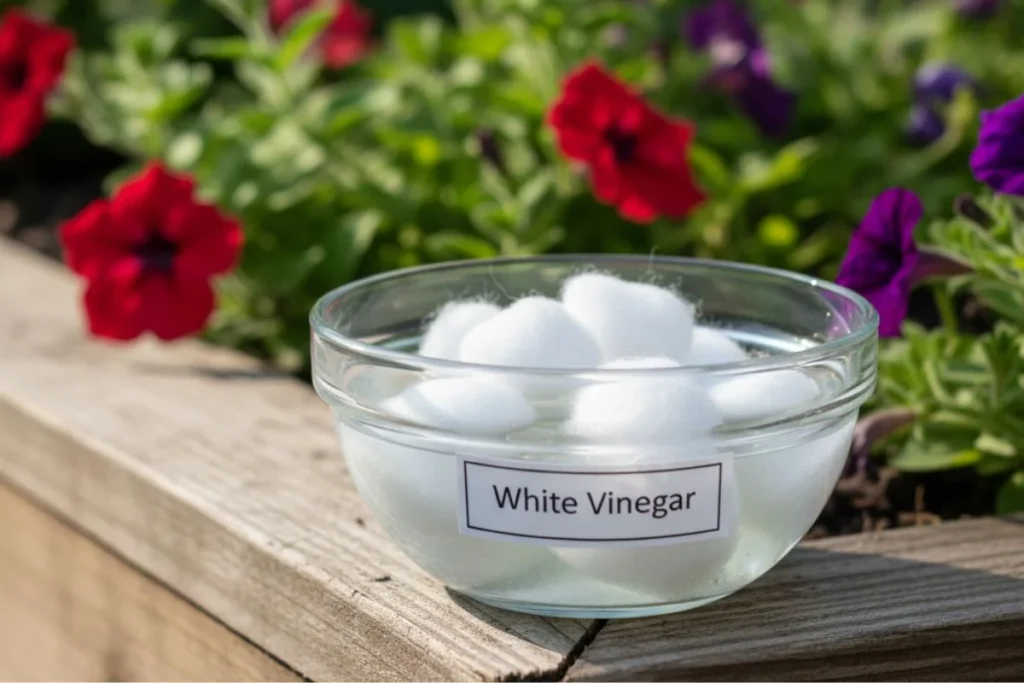
Why It Works: If citrus isn’t strong enough, vinegar is the next level up. The strong, pungent, and acidic smell of plain white vinegar is highly offensive to most dogs. A quick sniff is usually enough to make them turn and walk the other way.
How to Use It (The Safe Way): IMPORTANT: You must never spray vinegar directly on your plants or soil. Its high acidity will act as an herbicide and can severely damage or kill your flowers. The safe way to use vinegar is to create scent stations that protect your plants.
- The Cotton Ball Method: Soak several cotton balls or a few small rags in undiluted white vinegar. Then, place them in small, discreet containers (like baby food jars with holes poked in the lid, or even just bottle caps) and tuck them around the perimeter of your garden bed. Alternatively, you can attach the soaked cotton balls to small garden stakes. The scent will create a powerful invisible barrier.
Pros & Cons: Vinegar is extremely cheap and easy to find. On the other hand, the smell dissipates very quickly in the open air and you will likely need to re-soak the cotton balls every day or two for it to remain effective.
3. “Defensive Planting” with Smelly Herbs
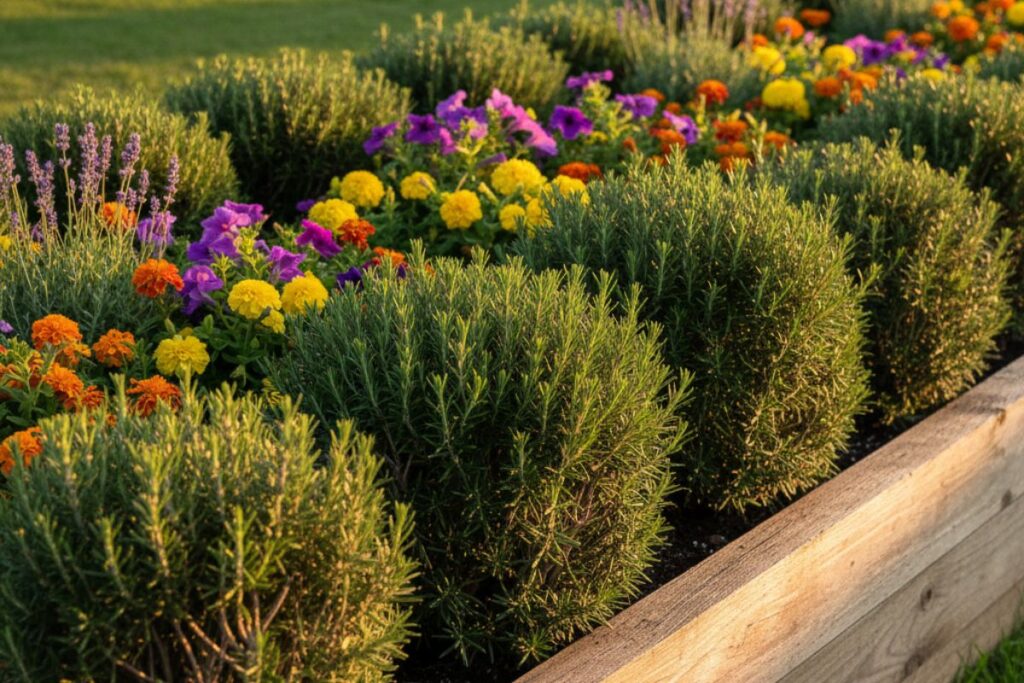
Why It Works: This is the most beautiful and integrated solution: use plants themselves as the repellent! Many dogs dislike the strong, aromatic scents of certain hardy herbs. By planting a border of these herbs, you create a living, breathing barrier that looks beautiful and requires very little maintenance once established.
What to Plant: The best choices are woody, resilient herbs with strong scents that are also known to be safe for dogs.
- Rosemary: This is a fantastic choice. It grows into a dense, woody shrub and has a very strong pine-like scent.
- Lavender: The floral scent that is calming to humans is often disliked by dogs.
- Sage: Another hardy herb with a strong, pungent aroma.
For a complete list of fragrant and beautiful herbs that are safe to have in your yard, check out our detailed guide to 10 Dog-Safe Herbs You Can Grow in Your Garden.
Pros & Cons: This is a beautiful, long-term solution. However, it is not a quick fix, as the plants need time to grow and become established. It is most effective as part of a larger garden design.
4. Bitter Apple / Bitter Orange Spray

Why It Works: This strategy targets your dog’s sense of taste rather than their sense of smell. Bitter apple or bitter orange sprays are specifically designed to taste awful to dogs but are completely safe for them to lick. This is the best solution if your primary problem is a dog who chews on plants, decorative borders, or hoses, rather than one who just digs or tramples.
How to Use It: Simply spray the product directly onto the surfaces you want to protect. A single taste is often enough to create a negative association and deter them from chewing on that object again. Reapply after heavy rain.
The effectiveness of taste deterrents is a well-known concept in humane dog training. Experts at the American Kennel Club (AKC) often recommend them as a training aid. (Link American Kennel Club (AKC) to a relevant article on their site about chewing deterrents).
Pros & Cons: This method is very effective for dogs that chew on plants. However, it is not a scent deterrent, so it will not stop a dog from walking through or digging in the bed. It also needs to be purchased from a pet store.
5. The Spice Rack Repellent (Cayenne Pepper)
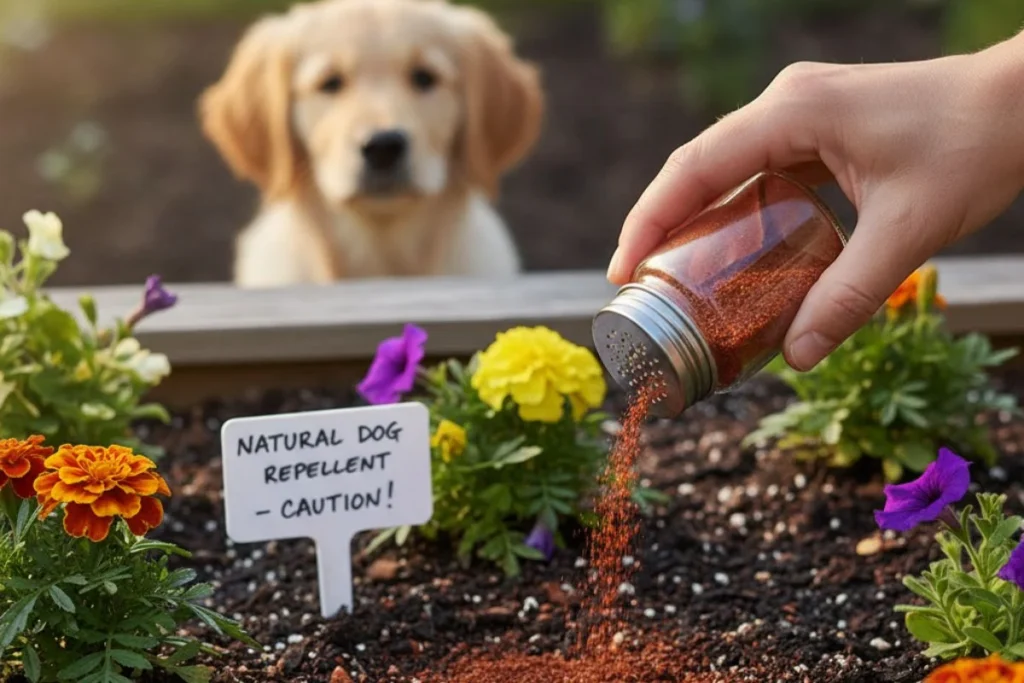
Why It Works: The irritating compound capsaicin in chili peppers is a powerful deterrent for a dog’s extremely sensitive nose. A quick sniff of the spicy powder is usually a very memorable and unpleasant experience, convincing a dog to stay away from the area for good.
How to Use It: Lightly sprinkle a small amount of cayenne pepper powder directly on the soil around the perimeter of your flower bed. This creates a “scent fence” that your dog will not want to cross. You do not need a large amount for it to be effective.
CRITICAL SAFETY WARNING: Use this method with extreme caution and only as a last resort after milder options have failed. NEVER apply cayenne pepper on a windy day. AVOID applying it directly to plants where the powder could easily get into your dog’s eyes, nose, or mouth, as it can cause significant pain and irritation. This method is for application to the soil only.
Pros & Cons: It is cheap and can be very effective. But, the risk of causing your dog discomfort if used improperly is high, so it must be applied with great care.
The Bigger Picture: Repellents are Just One Piece of the Puzzle
Natural repellents can be a fantastic tool for protecting a specific area and reinforcing a boundary you are trying to teach. However, they are most effective when they are used as part of a larger, holistic strategy that addresses your dog’s underlying behaviors and the overall design of your yard. A repellent might stop them from entering one flower bed, but if they are bored, they will simply find another place to get into trouble.
These repellents are a great way to support your training efforts. For a complete guide on how to use positive redirection and other techniques to solve the root cause of the problem, read our post on 7 Humane Ways to Stop Your Dog from Digging Up Flower Beds.
The ultimate long-term solution is always to create a space that prevents these conflicts from happening in the first place. To learn about creating designated zones, durable paths, and effective physical barriers, see our ultimate guide on how to design a garden layout that your dog won’t destroy.
Conclusion
As you can see, you can absolutely protect your flower beds in a way that is safe, humane, and natural. The key is to use scents, tastes, and textures that your dog naturally dislikes to create a gentle but clear boundary around your prized plants.
Ultimately, you don’t need to resort to harsh chemicals to have a beautiful garden and a happy dog. By experimenting with these 5 natural dog repellents, you can find the perfect humane solution that works for your specific dog. This allows you to protect your beautiful blooms and bring peace and harmony back to your garden.