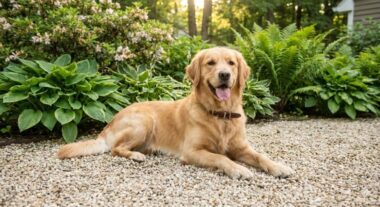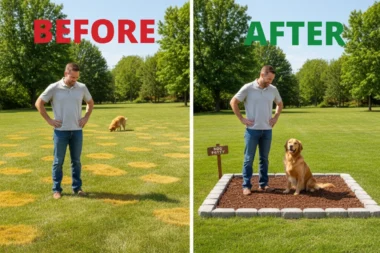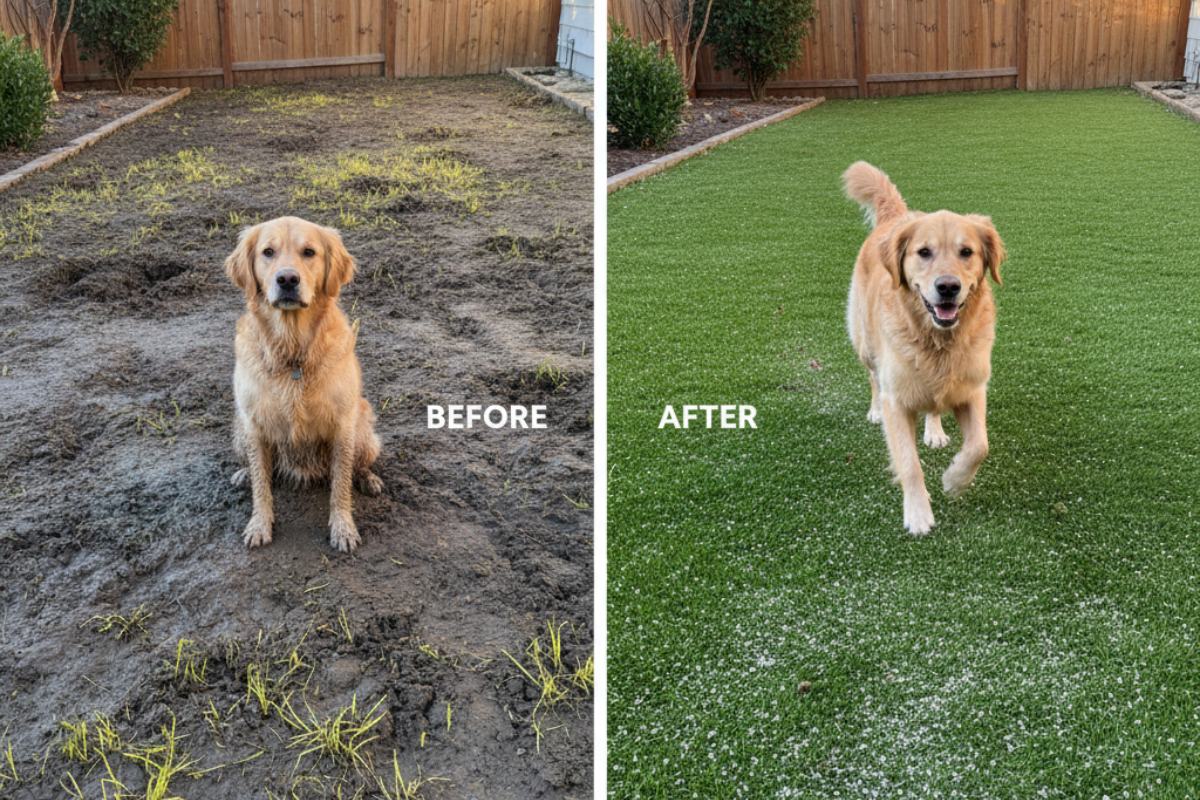
It’s the heart of your yard—that one special spot where your dog loves to chase balls, roll around, and get a serious case of the zoomies. Unfortunately, after a few months of enthusiastic play, that spot now looks less like a lawn and more like a muddy, barren racetrack covered in yellow urine spots. This is a common problem for loving dog owners everywhere.
Finding a solution can feel like a huge challenge. You need something that can withstand constant, high-traffic conditions while remaining safe for your pet. That’s why choosing from the best dog-safe ground covers is so important. Standard grass often can’t keep up, but there are amazing alternatives available (like nitrogen-resistant clover or mud-proof artificial turf).
This guide will walk you through the top options, from tough living plants to indestructible non-plant surfaces. We’ll help you reclaim your yard and create a play area that is built to last.
What Makes a Ground Cover “Dog-Tough”? (Your Buying Guide)
Before you choose a solution, it’s essential to understand the qualities that make a ground cover truly suitable for a dog’s play area. A patch of dirt can be covered with anything, but only the right materials will thrive and provide a safe, long-lasting surface. We evaluated our top picks based on these key criteria.
Durability & Traffic Tolerance
This is the most critical factor. Ground cover for a dog run must be exceptionally resilient. For living plants, this means looking for specific biological advantages. For instance, some grasses and clovers have deep root systems that anchor them firmly in the soil. Others spread via runners, which are stems that grow horizontally either just below the ground (rhizomes) or just above it (stolons). These runners enable the plant to continually produce new growth, effectively self-repairing the worn patches your dog creates. Non-plant options, such as artificial turf, depend on the durability of their synthetic fibers and the strength of their backing material.
Safety First: 100% Non-Toxic is a Must
This is a non-negotiable rule. A ground cover is a surface your dog will walk on, lie on, roll on, and likely nibble from time to time. Therefore, any living plant you choose must be completely non-toxic. This includes the leaves, stems, flowers, and roots. Always verify a plant’s safety before introducing it to your landscape. Your peace of mind is paramount.
For a comprehensive list of dangerous plants to avoid in your entire yard, our pillar post on The Ultimate List of 30+ Common Garden Plants That Are Toxic to Dogs is an essential resource.
Maintenance Level & Water Needs
A durable, dog-friendly yard shouldn’t mean more work for you. In fact, many of the toughest options are surprisingly low-maintenance compared to a traditional, delicate lawn. A perfect lawn often requires constant mowing, fertilizing, and watering. In contrast, alternatives such as clover require less water, fertilize themselves, and require less frequent mowing. Non-plant options such as mulch or turf require no watering. Consider how much time and effort you are willing to dedicate to upkeep.
Urine Resistance
This is a significant factor for anyone tired of seeing those tell-tale yellow and brown spots on their lawn. Dog urine is highly concentrated with nitrogen. While a bit of nitrogen is beneficial as a fertilizer, a direct application acts like a chemical spill, burning and killing the grass. Some plants are naturally more resistant to this. Specifically, plants like clover are “nitrogen-fixers,” meaning they pull nitrogen from the air and aren’t as affected by the nitrogen in urine. This makes them a fantastic choice for preventing lawn burn.
Living Ground Covers: The Best Plants for a Dog Play Area
If you want to maintain a green, living surface in your yard, you need to choose plants that are well-suited. These options are known for their ability to withstand the rigors of a playful pup.
1. Clover (The Resilient & Self-Fertilizing Option)
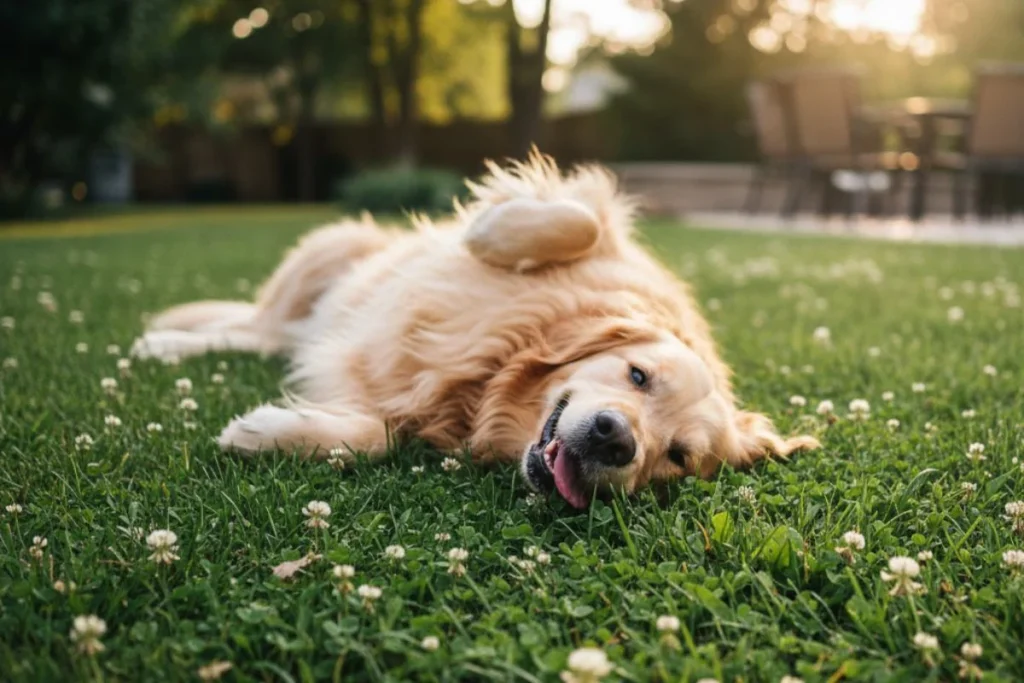
Why It Works: Clover is a powerhouse for a dog-friendly yard. It is a tough, fast-growing plant that is incredibly soft on paws. Most importantly, it stays green even in dry summer conditions when traditional grass starts to turn brown. Its most significant advantage, however, is its high resistance to dog urine burn. Clover is a nitrogen-fixing plant, meaning it fixes nitrogen from the atmosphere. As a result, the concentrated nitrogen in dog urine doesn’t harm it. It simply uses what it needs.
Pros & Cons:
- Pros: Highly resistant to urine spots. Very drought-tolerant and requires less water than grass. Stays green all summer. It’s soft and comfortable. It also naturally fertilizes the surrounding soil, which can actually help your existing grass become healthier.
- Cons: The flowers will attract bees, which can be a concern for some dogs and owners. It can also stain light-colored fur or clothing more easily than grass. It is not as durable as some of the toughest grasses for dogs that are excessively heavy or athletic.
Best For: Mixing into an existing lawn to make it more durable and less prone to yellow spots. A lawn with a 20-40% mix of micro-clover is a tough, low-maintenance, and eco-friendly solution for most family dogs.
2. Creeping Thyme (The Fragrant & Hardy Choice)
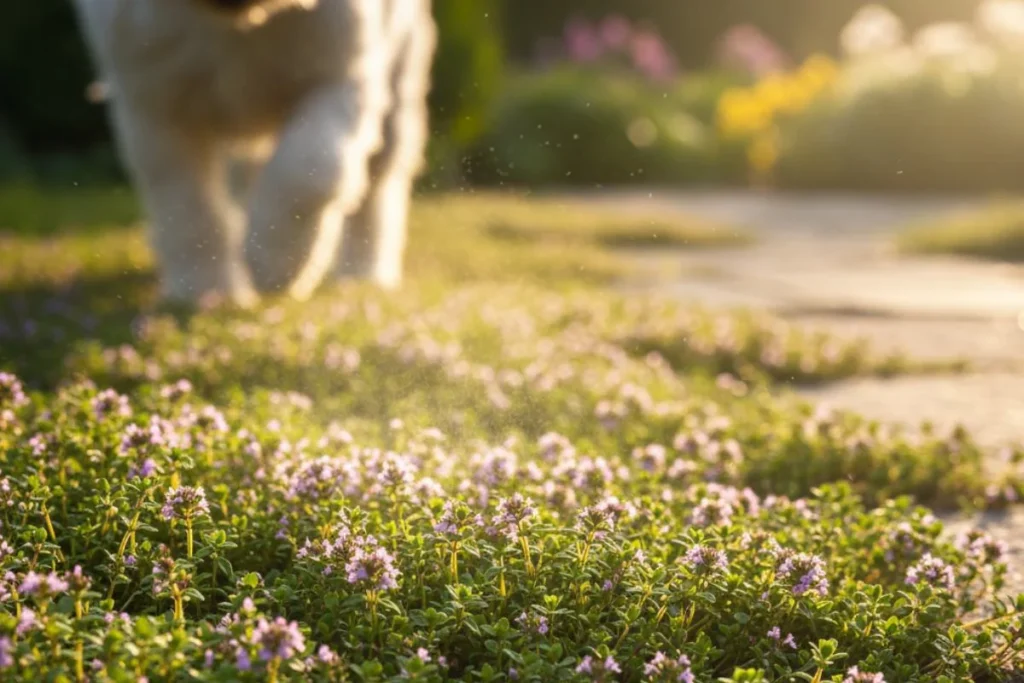
Why It Works: For a tough, low-growing, and beautifully fragrant option in a sunny spot, creeping thyme is a winner. It forms a dense, carpet-like mat that can withstand light to moderate paw traffic. As a bonus, it releases a lovely, pleasant scent when it’s walked upon, making it one of the best dog-safe herbs to add to your sensory garden.”
Pros & Cons:
- Pros: It has a wonderful fragrance. It is extremely drought-tolerant and loves full sun. It produces beautiful, tiny flowers in the spring and summer. Furthermore, it is very low-growing and often doesn’t require any mowing.
- Cons: It is not durable enough for constant, high-energy play from large, rambunctious dogs. Additionally, it can take time to establish and fill a large area. It prefers well-drained soil and will not thrive in wet, boggy areas.
Best For: Lower-traffic desire lines, filling gaps between pavers on a pathway, or yards with smaller, less active dogs. It is not a complete lawn replacement for a high-energy dog.
3. Hardy Grass Blends (The Toughest Traditional Lawns)
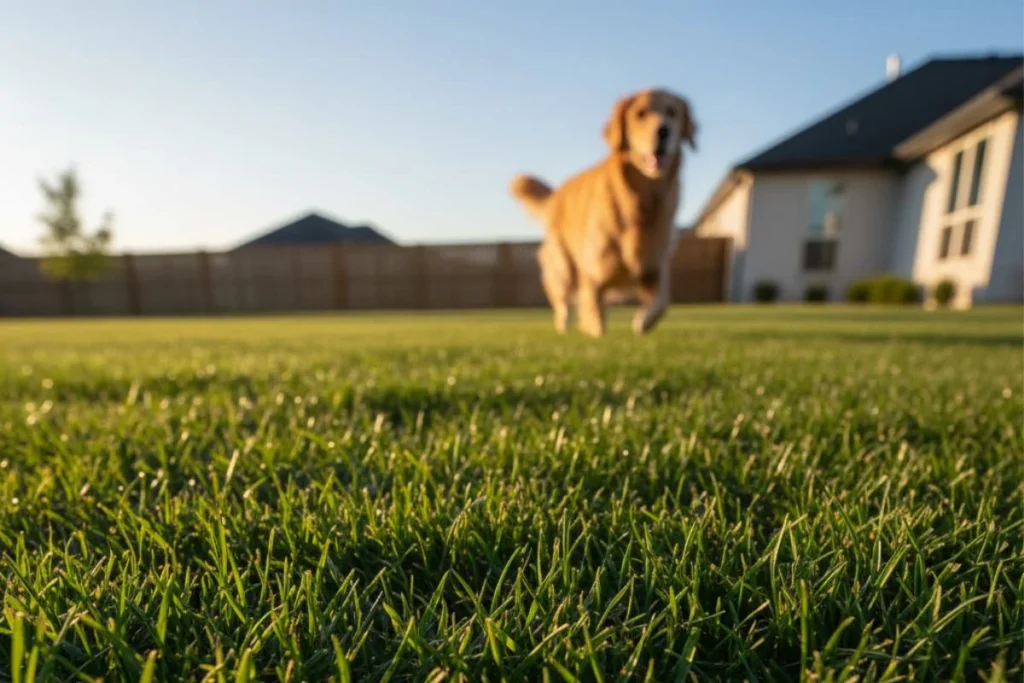
Why It Works: If you love the classic, uniform look of a traditional lawn, the key is to choose the right grass type. A single grass variety is often weak. However, a blend of hardy grasses creates a more resilient, self-repairing turf.
- For cooler climates, a blend of Kentucky Bluegrass and Tall Fescue is a classic combination. The Tall Fescue provides deep-root durability, while the Kentucky Bluegrass spreads via rhizomes to fill in worn-out spots.
- For warmer climates, Bermuda Grass is the champion of durability. It is extremely tough, repairs itself aggressively, and can withstand heavy use.
Pros & Cons:
- Pros: Provides the classic, uniform lawn aesthetic. Good varieties have excellent self-repairing capabilities. It is the traditional surface for family activities.
- Cons: It has higher water and maintenance needs than the alternatives, including regular mowing, fertilizing, and aeration. Even the toughest grasses are still susceptible to some urine damage over time.
Best For: Homeowners who want a traditional lawn and are committed to the regular upkeep required to keep it healthy and strong enough to withstand dog play. For detailed scientific information on which turfgrass species perform best under traffic, resources from university programs like Purdue University’s Turfgrass Science are invaluable.
Non-Plant Ground Covers: The Indestructible Options
Sometimes, a living plant cannot survive the level of activity from a very energetic dog. In these cases, a non-plant ground cover is the best and most permanent solution.
4. Artificial Turf (The Ultimate Low-Maintenance Lawn)
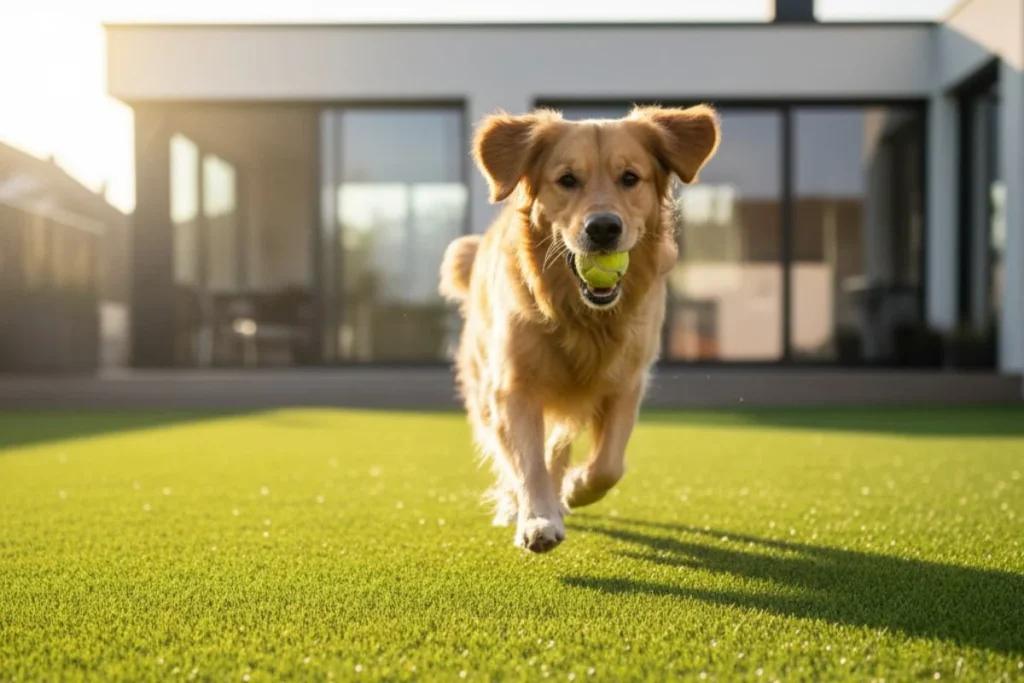
Why It Works: For the highest-traffic areas, dedicated dog runs, or owners who want a guaranteed, green, mud-free yard year-round, modern artificial turf is the ultimate solution. High-quality pet turf is specifically designed for heavy use. It has a highly permeable backing to ensure proper drainage of urine and water. Additionally, it features antimicrobial properties built into the fibers to reduce odors. The installation process involves a deep base of compacted stone, ensuring the area is always stable and puddle-free.
Pros & Cons:
- Pros: It is highly durable and can last for 15-20 years. It means no mud, ever. Your dog and your house stay cleaner. It is always perfectly green and requires no mowing, watering, or fertilizing. It is also very easy to sanitize.
- Cons: It has a very high upfront installation cost. It can also get hotter than natural grass in direct, intense sunlight, though using a light-colored, cooling infill can significantly reduce this.
Best For: Dedicated dog runs, small urban yards where growing grass is difficult, or any owner who wants a zero-maintenance, picture-perfect lawn solution and is willing to make the initial investment.
5. Natural Mulch (The Budget-Friendly & Natural Choice)

Why It Works: For a very affordable and natural-looking play surface, dog-safe wood mulch is a great option. This is particularly effective for creating a dedicated dog run or a specific play zone within a larger yard. It eliminates mud, is soft on paws, and the right kind of wood can even help control odors and repel fleas and ticks.
What to Use: The type of mulch you choose is significant. You want mulch made from cedar or pine bark with larger, smoother chips or nuggets. Avoid finely shredded mulch, as it can create splinters.
CRITICAL SAFETY WARNING: You must NEVER use Cocoa Mulch. It is made from cocoa bean shells and contains theobromine, which is toxic to dogs, just like chocolate.
Pros & Cons:
- Pros: It is very affordable and easy to install yourself. It provides excellent mud control and has a natural look and smell.
- Cons: It needs to be topped up or completely replaced every year or two as it naturally decomposes. Lighter pieces of mulch can also be tracked indoors on your dog’s paws or fur.
Best For: Creating a dedicated, mud-free dog run or play zone on a tight budget.
Read More: Want to replace your whole lawn? Read our full guide on How to Create a Dog-Friendly Garden Without Grass.
Making Your Ground Cover Part of a Larger Plan
Choosing the right ground cover for your dog’s favorite play spot is a huge step toward a more beautiful and functional yard. However, this choice becomes even more effective when it’s part of a complete, well-thought-out design for your entire outdoor space. A tough lawn is great, but it won’t stop your dog from digging in your flower beds or running through your vegetable patch.
To learn how to create specific zones for play, potty, and relaxation, as well as durable paths perfect for placing around your DIY Dog-Friendly Garden Path, and protected planting areas that all work together, read our ultimate pillar post on how to design a garden layout that your dog won’t destroy.
As you landscape around your new, durable play area, choose beautiful, non-toxic plants. See our comprehensive guide to 15 beautiful flowers that are completely safe for dogs for worry-free inspiration.
Conclusion
You do not have to live with a muddy, worn-out lawn that looks like a battlefield. As you can see, from living, self-healing plants like clover to indestructible, maintenance-free options like artificial turf, there is a perfect solution for every muddy dog yard. The key is to honestly assess your dog’s activity level, your climate, and your budget, and then choose a surface that can withstand their playful energy.
Ultimately, by choosing one of the best dog-safe ground covers from this guide, you can create a durable, beautiful, and safe area for your dog’s daily zoomies. You can finally reclaim your yard for the whole family to enjoy, without sacrificing your dog’s happiness or your love for a beautiful landscape.