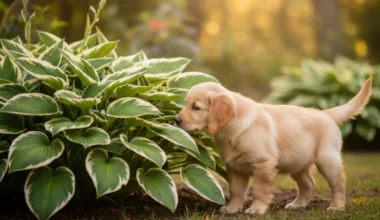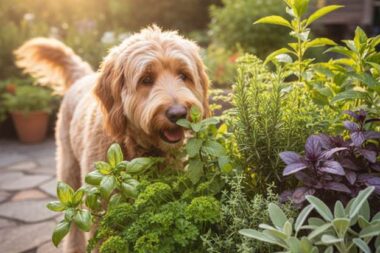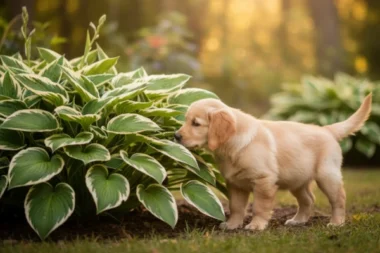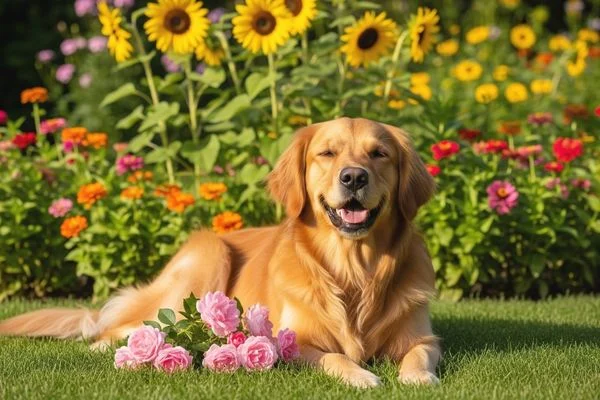
Creating a vibrant, flower-filled garden is one of life’s simple joys. For dog owners, that joy is multiplied when you can watch your furry friend safely explore, play, and nap among the beautiful blooms without a hint of worry. It’s about building a shared paradise, a space where both you and your pet can find happiness and peace.
After learning about the surprising number of toxic plants, many caring owners ask, “What are some flowers safe for dogs?” The fear of choosing the wrong plant can take the joy out of gardening, but it doesn’t have to.
The great news is that a wide world of stunning, non-toxic options is available. This guide is dedicated to those beautiful possibilities, showcasing 15 gorgeous and versatile flowers that will bring color, life, and most importantly, peace of mind back to your yard.
Understanding What “Flowers Safe for Dogs” Truly Means
Before we dive into our colorful list, it’s crucial to clarify one important point. The term ‘non-toxic’ or ‘dog-safe’ means that ingestion of the plant is not expected to cause serious illness or poisoning. It does not mean the plant is an edible treat.
Think of it this way: many things in your home are non-toxic, but you wouldn’t want your dog eating them. The same applies to plants. If a dog eats a large quantity of any plant material—even a safe one—it can cause mild gastrointestinal upset, such as vomiting or diarrhea, simply because their digestive system isn’t designed to handle large amounts of vegetation.
Furthermore, true garden safety goes beyond the plant itself. Always ensure any fertilizers, pesticides, or soil amendments you use are explicitly labeled as pet-safe. The goal of a dog-safe garden is to create a worry-free environment where accidental nibbles won’t lead to an emergency vet visit, and thoughtful supervision is always the best practice.
15 of the Best Flowers Safe for Dogs You Can Plant Today
Now, let’s get to the fun part! Here is a list of beautiful, popular, and easy-to-find flowers that you can plant with confidence, knowing they are non-toxic to your canine companion.
1. Sunflowers (Helianthus)
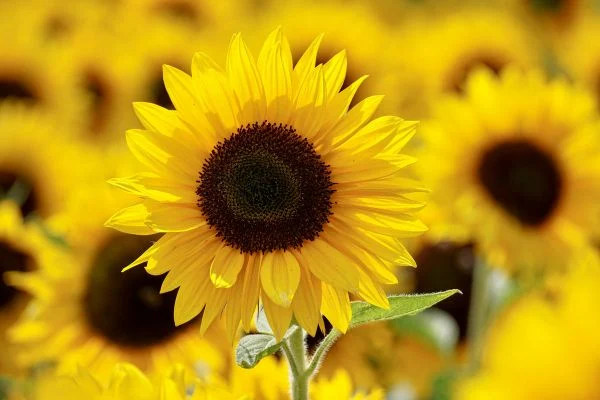
- Why You’ll Love Them: It’s impossible not to smile when you see a sunflower. These cheerful, towering giants bring a touch of rustic sunshine to any garden space. They are incredibly easy to grow from seed, making them a fun project for families, and they are completely safe for curious pups who might investigate a fallen leaf or petal.
- Growing Tips: As their name implies, full sun is an absolute must—at least 6-8 hours of direct sunlight per day. Plant them in a spot with well-drained soil and provide support like a stake or a fence for taller varieties to lean on, as their heavy heads can cause them to droop.
- Design Ideas: Sunflowers are perfect as a tall, dramatic backdrop along a fence or the back of a garden bed. Shorter, bushier varieties can also be grown in large, sturdy containers on a patio.
- Safety Note: The seeds are also non-toxic to dogs and are a good source of healthy fats. However, it’s best to serve them shelled and in moderation to avoid an upset stomach or a potential choking hazard from the hard shells.
2. Roses (Rosa)
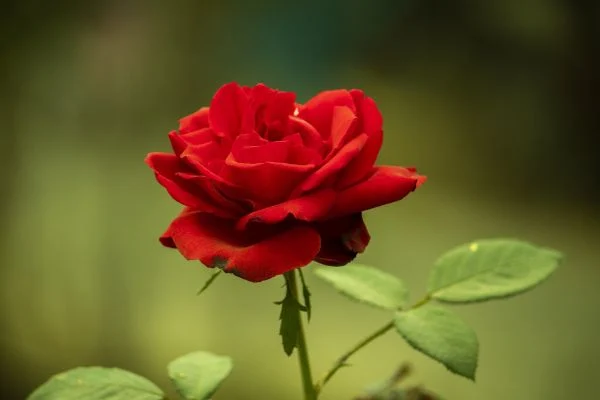
- Why You’ll Love Them: The timeless symbol of love and beauty, the rose is thankfully non-toxic to dogs. Available in a seemingly endless variety of colors, forms, and fragrances—from sprawling climbing roses to compact shrub roses—they can add a touch of elegance to any garden style.
- Growing Tips: Roses are sun-lovers, requiring at least six hours of full sun for the best blooms. They thrive in rich, well-drained soil and benefit from regular feeding during the growing season with a pet-safe fertilizer.
- Design Ideas: Shrub roses make a beautiful, low-maintenance hedge. Climbing roses can be trained up a trellis or arbor to create a stunning vertical focal point.
- Safety Note: While the plant itself isn’t toxic, the thorns are a mechanical hazard. They can scratch your dog’s skin, nose, or eyes. Plant roses away from high-traffic “zoomie zones” and consider thornless varieties if you have a particularly boisterous pup.
3. Snapdragons (Antirrhinum)
![A stalk of colorful snapdragon flowers, a fun and whimsical addition to a dog-safe garden.]](https://lifes101.com/wp-content/uploads/2025/09/Snapdragon-flowers.webp)
- Why You’ll Love Them: With their whimsical, dragon-like blooms that can be gently squeezed to open and close, snapdragons are a delight for both kids and adults. They come in almost every color imaginable and add a wonderful vertical element to garden beds and containers, all while being perfectly safe for your canine friend.
- Growing Tips: Snapdragons are cool-weather annuals, thriving in full sun during the milder temperatures of spring and fall. In areas with very hot summers, they may stop blooming in the heat but can perk back up as temperatures cool.
- Design Ideas: Their tall, spiky form provides a great contrast to mounded flowers like petunias. They work beautifully as a “thriller” element in container arrangements or planted in large drifts in a cottage-style garden.
4. Marigolds (Tagetes)
![A vibrant orange marigold, an easy-to-grow annual flower that is safe for dogs.]](https://lifes101.com/wp-content/uploads/2025/09/Marigold-flower.webp)
- Why You’ll Love Them: Marigolds are one of the hardiest and easiest annuals to grow. Their cheerful pom-pom blooms in shades of orange, yellow, and red are a staple of summer gardens. As a bonus, their distinct scent is known to be a natural deterrent for some garden pests (and some dogs dislike the smell, too!).
- Growing Tips: Plant them in full sun with well-drained soil. They are very low-maintenance and drought-tolerant once established, making them a great choice for beginner gardeners.
- Design Ideas: Their compact, mounded shape makes them perfect for defining the border of a flower bed or vegetable garden. They also thrive in pots and window boxes.
- Safety Note: While non-toxic, it’s worth noting that African Marigolds (Tagetes erecta) are a different plant from Pot Marigolds (Calendula officinalis), but both are considered safe for dogs.
5. Zinnias (Zinnia)
![A colorful patch of zinnias, a beautiful and completely dog-safe flower that attracts butterflies.]](https://lifes101.com/wp-content/uploads/2025/09/zinnias-flower.webp)
- Why You’ll Love Them: If you want a non-stop explosion of color all summer long, zinnias are the answer. They are incredibly easy to grow from seed, come in a rainbow of colors, and are a favorite of butterflies. Best of all, they are completely harmless to dogs.
- Growing Tips: Zinnias love heat and full sun. Plant them in well-drained soil after all danger of frost has passed. The more you cut them for bouquets, the more they will bloom.
- Design Ideas: Taller varieties like ‘State Fair’ make a stunning backdrop, while shorter, mounding varieties like ‘Profusion’ are perfect for borders and containers. Their daisy-like blooms mix well with almost any other plant.
6. Asters (Aster)
![Purple Aster flowers, a beautiful perennial that provides dog-safe color in the fall.]](https://lifes101.com/wp-content/uploads/2025/09/Aster-flowers.webp)
- Why You’ll Love Them: Just when summer flowers begin to fade, asters burst onto the scene with a profusion of daisy-like blooms in shades of purple, blue, pink, and white. They are a crucial late-season food source for pollinators and are a safe choice for gardens with dogs.
- Growing Tips: Most asters prefer full sun and well-drained soil. They are hardy perennials that will come back year after year, growing into larger clumps over time.
- Design Ideas: Asters pair beautifully with other fall-blooming plants and ornamental grasses. They are a classic choice for cottage gardens and naturalistic planting schemes.
7. Pansies (Viola tricolor var. hortensis)
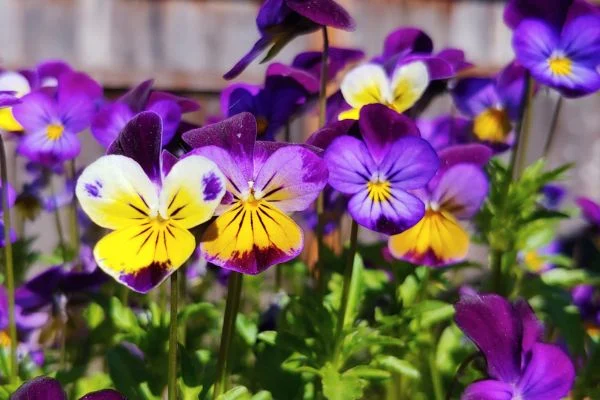
- Why You’ll Love Them: With their cheerful, expressive “faces,” pansies are a cool-weather favorite for a reason. They can withstand light frosts, making them perfect for adding color to your garden in early spring and late fall when not much else is blooming.
- Growing Tips: Plant pansies in a spot with full or partial sun and rich, moist soil. They will fade in the summer heat but can be replaced with heat-loving annuals.
- Design Ideas: Pansies are ideal for mass plantings in borders, and they are the perfect choice for container gardens and window boxes during the cooler months.
8. Petunias (Petunia)
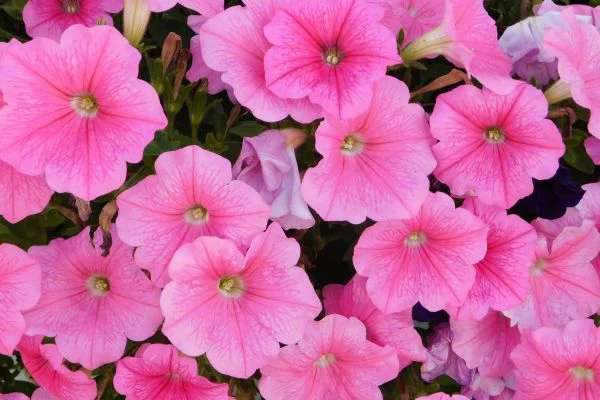
- Why You’ll Love Them: Petunias are the workhorses of the summer garden. They are available in an incredible range of colors and patterns, bloom profusely from spring until frost, and are completely dog-safe.
- Growing Tips: They need at least six hours of full sun to perform their best. Fertilize them regularly with a pet-safe product to keep the blooms coming. Trailing varieties are perfect for hanging baskets, while mounding types are great for beds.
- Design Ideas: Use them to spill out of containers and hanging baskets, or as a long-blooming ground cover at the front of a sunny border.
9. Impatiens (Impatiens walleriana)
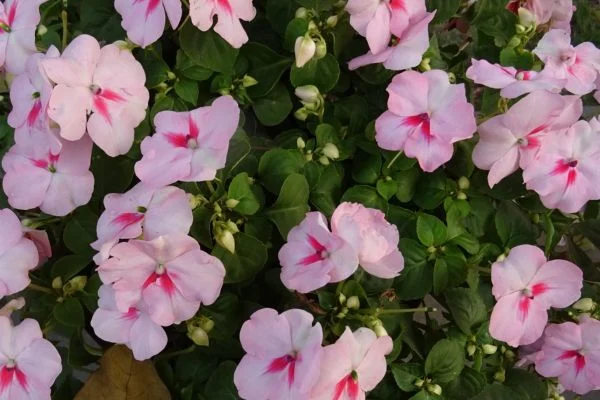
- Why You’ll Love Them: Finding colorful flowers for shady spots can be a challenge, but impatiens are the perfect solution. They provide continuous blooms in a wide range of colors all season long and thrive in the shade, all while being safe for your pets.
- Growing Tips: Plant them in a location with partial to full shade and rich, moist soil. They are not drought-tolerant and will need consistent watering.
- Design Ideas: Impatiens are perfect for brightening up shady borders, planting under large trees, or filling containers on a covered patio.
10. Camellias (Camellia)
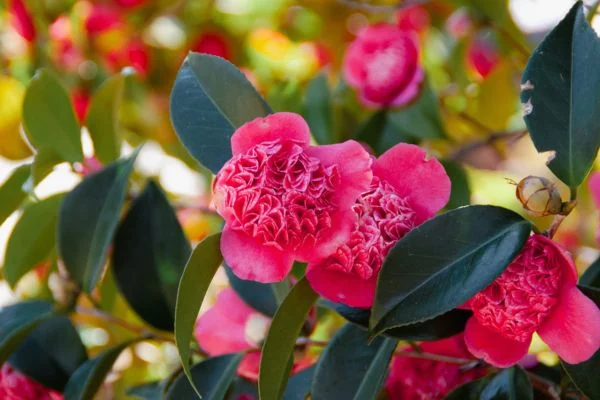
- Why You’ll Love Them: These elegant, broadleaf evergreen shrubs are prized for their stunning, rose-like flowers that bloom in the late winter or early spring. Their glossy, dark green leaves provide year-round structure in the garden.
- Growing Tips: Camellias prefer partial shade, especially protection from the hot afternoon sun, and acidic, well-drained soil.
- Design Ideas: They make a beautiful specimen plant or can be used to create a stunning, informal hedge in a shady part of the garden.
11. Gerbera Daisies (Gerbera jamesonii)
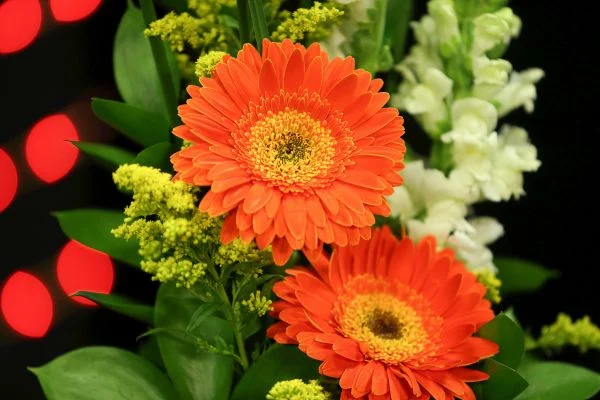
- Why You’ll Love Them: The quintessential happy flower! With their large, perfectly formed blooms in bold, clear colors, Gerbera Daisies are a favorite of florists and gardeners alike. They are a fantastic, non-toxic way to add a pop of cheerful color to your garden or patio.
- Growing Tips: They require full sun and well-drained soil to prevent root rot. While they are perennials in very warm climates, most gardeners treat them as annuals.
- Design Ideas: They are stunning in containers where their perfect blooms can be appreciated up close. They also work well at the front of a sunny border.
12. Coral Bells (Heuchera)

- Why You’ll Love Them: While they do send up delicate wands of bell-shaped flowers, Coral Bells are primarily grown for their stunning foliage. The mounding leaves come in an incredible array of colors, from deep purple and bronze to lime green and variegated patterns, providing season-long interest.
- Growing Tips: Most varieties prefer partial shade, though some can tolerate more sun. They are hardy, low-maintenance perennials that are great for beginner gardeners.
- Design Ideas: Use them to create a colorful, textured border in a shade garden or to add a splash of foliage color to mixed containers.
13. Polka Dot Plant (Hypoestes phyllostachya)
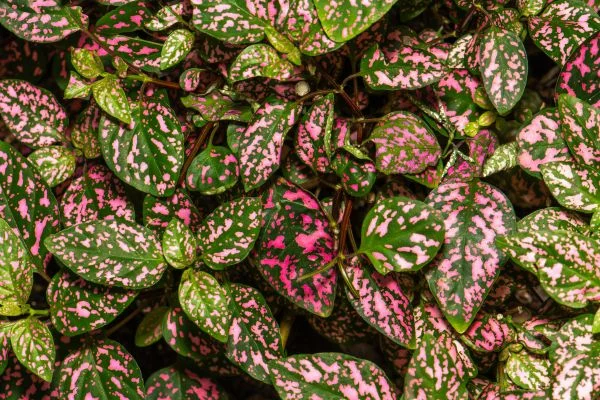
- Why You’ll Love Them: This is another foliage all-star. The Polka Dot Plant is beloved for its playful, speckled leaves in shades of pink, white, or red against a dark green background. It’s a fun, quirky, and safe plant for shady spots.
- Growing Tips: It needs bright, indirect light or partial shade. Too much sun will fade the colors. It prefers consistently moist soil. It is typically grown as an annual or a houseplant.
- Design Ideas: It’s perfect for adding a splash of unexpected color to shade containers or as a ground cover in a protected, shady corner of the garden.
14. Celosia / Cockscomb (Celosia)
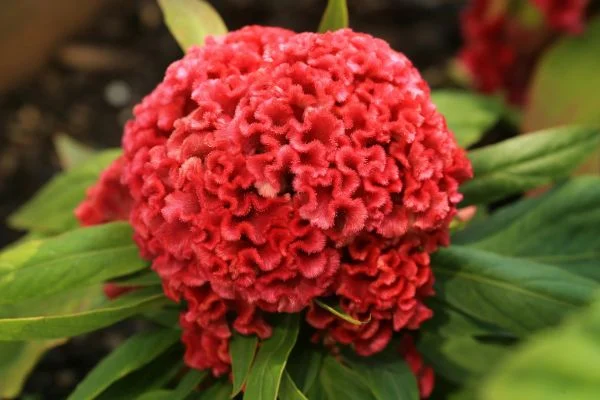
- Why You’ll Love Them: With their unique textures and fiery colors, Celosia always makes a statement. They come in three main types: the feathery plumes, the spiky spires, and the fascinating, velvety crests of the cockscomb varieties. All are safe for dogs.
- Growing Tips: They thrive in heat and full sun and are very low-maintenance. They are grown as annuals in most climates.
- Design Ideas: Their unique textures make them a fantastic focal point in mixed containers or as a bold statement in a sunny garden bed.
15. Hollyhocks (Alcea rosea)
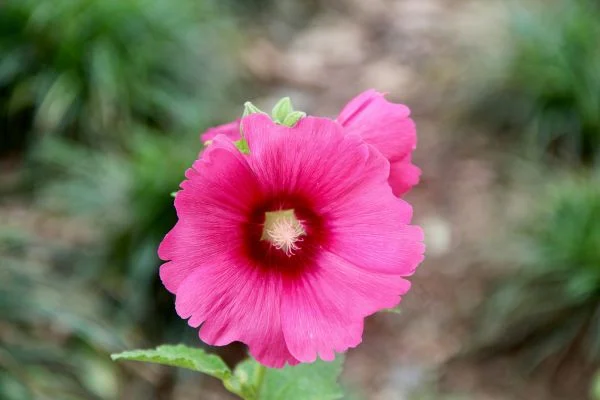
- Why You’ll Love Them: Hollyhocks are the embodiment of a charming, old-fashioned cottage garden. Their tall, stately spires are covered in large, beautiful flowers, and they are a completely safe and non-toxic choice for a garden with pets.
- Growing Tips: They are typically biennials, meaning they grow foliage the first year and flower the second. They need full sun and rich, well-drained soil. They can be prone to rust, so good air circulation is key.
- Design Ideas: Use them at the back of a deep border or against a fence or wall where their impressive height can be appreciated.
Designing with Your Dog-Safe Flowers
Now that you have a “safe list” of beautiful options, you can start planning your garden with confidence. It’s not just about what you plant, but how you plant it.
- Create Colorful Clusters: Grouping flowers with similar light and water needs together in large clusters of 3, 5, or 7 creates a much bigger and more pleasing visual impact than planting single flowers dotted around. Try pairing the bright yellows of Marigolds with the deep purples of Asters for a striking fall combination.
- Consider Height and Texture: A great garden design has layers. Use taller, more structural flowers like Sunflowers and Hollyhocks at the back of your beds, medium-sized mounding plants like Zinnias and Roses in the middle, and shorter, trailing plants like Pansies and Petunias at the front edge.
- Plant in Sturdy Containers: Container gardening is a fantastic way to add pops of color to your patios, decks, and porches. Using large, heavy ceramic or wooden planters keeps the flowers contained and can help protect them from an errant paw or wagging tail.
Of course, a truly dog-friendly garden is about more than just plant choice; it’s about the entire layout. To learn how to create durable paths, designated play zones, and protected beds that work with your dog’s nature, don’t miss our definitive pillar post on how to design a garden layout that your dog won’t destroy.
More About Flowers Safe for Dogs (FAQ
Q: Are common herbs safe for dogs?
A: Many popular culinary herbs are perfectly safe for dogs in the small amounts they might nibble in the garden. Herbs like Rosemary, Basil, Thyme, Sage, and Oregano are generally considered non-toxic and can be a great, fragrant addition to your garden beds or containers.
Q: What about ornamental grasses?
A: Most ornamental grasses are considered non-toxic and can add beautiful texture, movement, and sound to your garden. Varieties like Fountain Grass, Purple Basil (Pennisetum setaceum ‘Rubrum’), and Zebra Grass (Miscanthus sinensis) are popular, safe choices that are also quite durable.
Q: Where can I double-check if a plant is safe?
A: The best and most reliable resource is the ASPCA’s comprehensive and searchable plant database. It is the gold standard for pet-safe plant information and is what most veterinarians use as a reference. You can find it here: The ASPCA’s Comprehensive Plant Database.
Conclusion
As you can see, you absolutely do not have to sacrifice a beautiful, colorful garden just because you have a dog. There is a wide and wonderful world of stunning, vibrant, and completely safe flowers waiting to be planted, ready to bring you joy without bringing you worry.
Now you have a trusted list of gorgeous flowers safe for dogs, so you can head to your local nursery with confidence and excitement. You’re ready to start creating the vibrant, worry-free garden of your dreams that you and your beloved pet can enjoy together for years to come.