Figuring out how to design a garden layout that your dog won’t destroy is one of the most common challenges for pet owners who also love a beautiful yard. You envision a serene oasis with lush flowerbeds and a perfect lawn, while your loving companion sees an exciting agility course and a five-star digging zone. This conflict between the human dream and canine reality is frustrating, but a harmonious solution is closer than you think.
The secret isn’t to constantly fight against your dog’s nature, but to design with it. This guide will introduce you to ‘Dogscaping’—a thoughtful landscaping approach that creates a stunning, resilient garden for everyone. We will move beyond simple ‘dog-proofing’ and provide a comprehensive blueprint for a space that accommodates and celebrates your dog’s needs from the outset, strengthening your bond in a shared outdoor paradise.
Step 1: Think Like a Dog – A Deep Dive into Canine Garden Behavior
Before you sketch a plan or lift a shovel, the most critical step is to become an expert observer of your own dog. See your garden through their eyes and understand the deep-seated instincts that drive their behavior. What we label as ‘destructive’ is often just a dog being a dog. By understanding their motivations, you can channel their energy and instincts into positive outlets rather than constantly suppressing them.
The Need for Speed: The “Zoomie Zone” and Patrol Paths
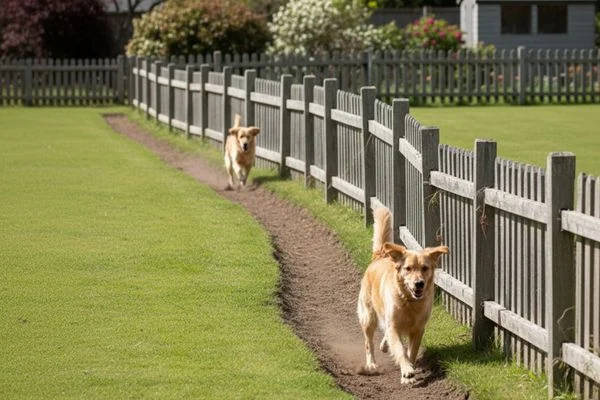
Have you noticed a distinct, worn-down track along your fenceline? Or a muddy, direct line from the back door to that one specific spot under the big tree? These aren’t random; they are well-defined routes.
- Patrol Paths: Dogs instinctively patrol the perimeter of their territory. This is especially common along fences where they can see, hear, and smell activity on the other side. This repeated trotting compacts the soil and wears away grass.
- Desire Lines: These are the most efficient routes between two points of interest—the door to the shade, the patio to the water bowl. Fighting these natural runways is a frustrating and losing battle. Acknowledging where your dog wants to run is the first step to designing a layout that incorporates, rather than obstructs, their flow.
The Call of the Wild: Decoding Your Dog’s Digging
Digging is a deeply ingrained instinct, not a malicious act to ruin your prize-winning roses. Identifying the reason for the digging is key to redirecting it.
- Instinctual Digging: Many breeds, especially terriers and hounds, were bred to hunt for prey underground. They may be digging in response to the scent or sound of moles, voles, or other burrowing animals.
- Comfort Seeking: On a hot day, the earth just a few inches below the surface is significantly cooler. Dogs will dig shallow pits to create a cool, comfortable place to lie down. You’ll often see this behavior under trees or near the house foundation.
- Boredom and excess energy are among the most common causes. A dog without sufficient physical exercise or mental stimulation will invent their own fun, and digging is a fantastic and rewarding way for them to release pent-up energy.
- Anxiety or Escape: Dogs with separation anxiety may dig along fences or near gates as an escape attempt. This type of digging is often frantic and paired with other anxious behaviors.
Marking Their Territory: The Science Behind the Potty Problem
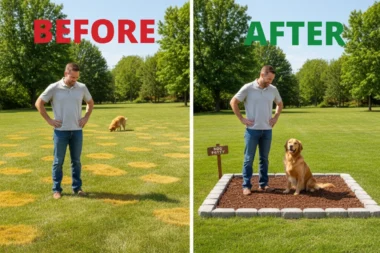
Dogs use urine and feces to communicate complex social information. This is why they often choose visually prominent locations to conduct business. The dreaded “lawn burn” is caused by the high nitrogen concentration in their urine. A little nitrogen is a fertilizer, but a concentrated dose acts like a chemical spill, killing the grass. This is often more pronounced with female dogs, who tend to squat and urinate in one spot, versus male dogs, who usually mark vertically on multiple objects.
A Matter of Taste: The Dangers of the Curious Chewer
Dogs, and especially teething puppies, explore and understand the world through their mouths. The texture of a soft plant, the satisfying crack of a fresh branch, or the feel of loose bark are all irresistible sensory experiences. This is not only destructive to your expensive plants but can be incredibly dangerous. They can’t distinguish between a safe stick and a branch from a toxic Yew tree. Your design must protect them from their own curiosity.
Step 2: The Foundation – Creating Zones for Ultimate Harmony
The most successful, peaceful, and beautiful dog-friendly gardens are thoughtfully zoned. Just like your house has a kitchen for eating and a bedroom for sleeping, your garden can have designated areas for different activities. This creates clear physical and visual cues for your dog, teaching them where they can play freely and where a calmer demeanor is expected.
The Action Zone: A Dedicated Space for Play and Exercise
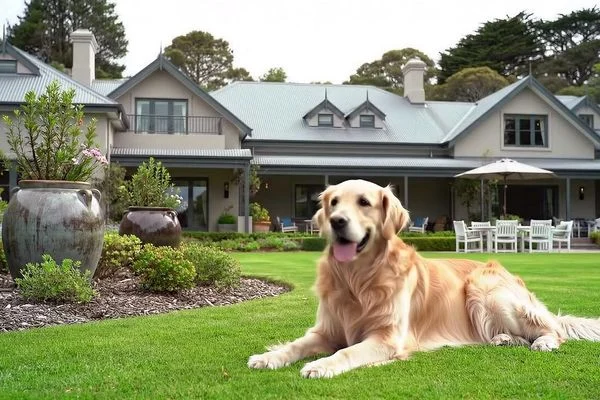
Every dog needs a safe space to run, roll, fetch, and release their energy. Designate an open area of your garden, ideally visible from the house, as the primary “Action Zone.”
- Size and Location: The size should be appropriate for your dog’s breed and energy level. Locate it away from fragile garden beds and your central entertaining patio to minimize chaotic overlap.
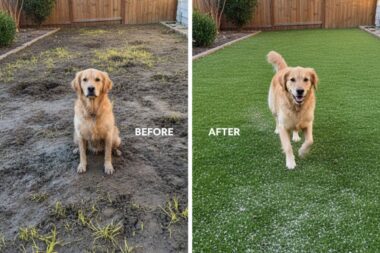
- Ground Cover: This area takes the most abuse, so its surface must be durable. We will cover specific material options in the next section, but this is the perfect spot for a tough, resilient lawn or a high-quality artificial turf.
- Features: Keep this area relatively free of obstacles. A tough, large water bowl and a basket of durable outdoor toys can help signal that this is the designated play space.
The Potty Zone: A Detailed Guide to Designing a Designated Bathroom
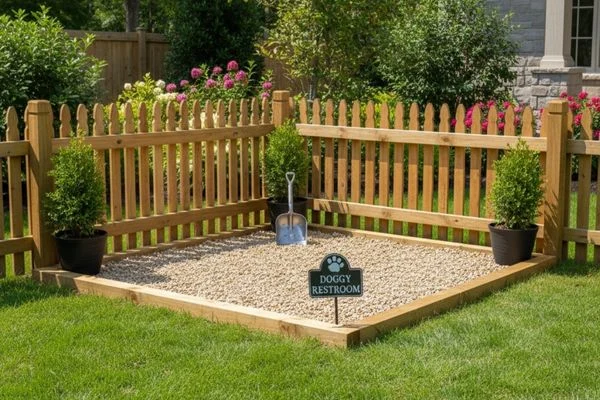
Training your dog to use one specific area as their bathroom is a game-changer that will save your lawn and your sanity.
- Location and Size: Choose a spot that is easily and quickly accessible from the back door, but discreetly located away from your central patio or windows. A 4×6-foot area is often sufficient for most dogs.
- Materials – Pros and Cons:
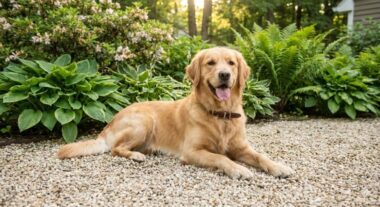
- Pea Gravel: Pros: Excellent drainage; easy to clean with a rake and hose; doesn’t retain odors. Cons: Some dogs dislike the texture, and it can get hot in direct sunlight.
- Cedar Mulch: Pros: Natural insect repellent, soft on paws, pleasant smell. Cons: Needs to be replaced annually due to breakdowns; it can be kicked around.
- Artificial Turf: Pros: Looks like grass, excellent drainage, very easy to clean and sanitize—cons: Higher initial installation cost.
- Potty Posts: You can add a “potty post” or even a large, interesting rock to give male dogs a clear target for marking.
- Step-by-Step Training:
- Lead your dog on a leash directly to the new potty zone every single time you take them out.
- Use a consistent verbal cue, such as “go potty” or “do your business.”
- Wait patiently. This can take several minutes initially. Do not let them play or wander.
- The moment they finish, reward them enthusiastically with high-value treats and praise.
- Repeat consistently for 1-2 weeks. Soon, they will head directly to their designated spot.
The People Zone: Protecting Your Prized Plants and Patios
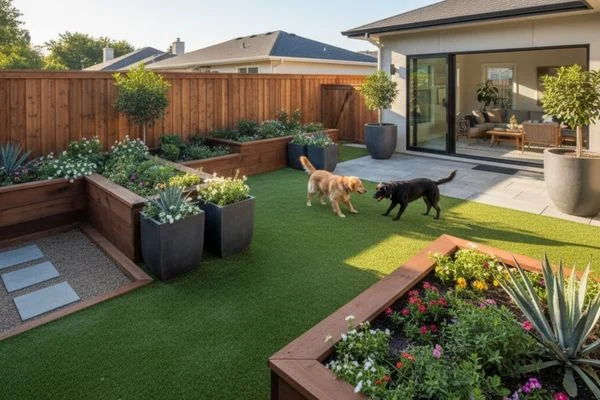
This is your sanctuary—the space for quiet morning coffee, outdoor dining, and your most treasured, delicate plants. The most effective way to protect it is to establish clear physical boundaries.
- Raised Garden Beds: Lifting your garden 18-24 inches off the ground is one of the most effective ways to protect it from trampling, digging, and casual urination.
- Decorative Fencing: Low, attractive border fences (such as picket or wrought-iron styles) can be installed around flowerbeds. They don’t need to be high; they need to serve as a clear visual and physical deterrent.
- Strategic Container Planting: Use large, heavy planters and pots on your patio and deck. This allows you to keep beautiful flowers and herbs close by while keeping them safely elevated out of your dog’s reach.
Step 3: A Deep Dive into Practical Materials and Planting Strategies
With your zones planned, it’s time to choose the right materials and plants that can withstand the challenges of coexisting with a dog.
Paths and Borders: The Art of Guiding Your Dog’s Paws
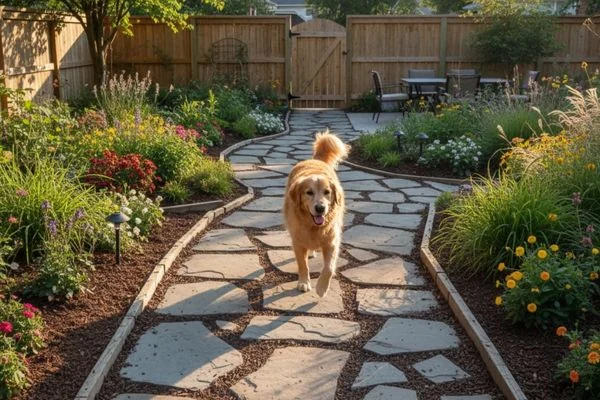
Instead of fighting your dog’s desire lines, formalize them. Transform those muddy tracks into beautiful, durable pathways. This not only protects the rest of your garden but also keeps your dog’s paws cleaner.
- Path Materials Comparison:
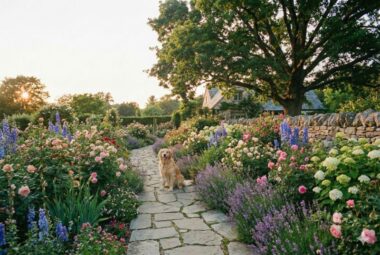
- Pavers/Flagstone: Pros: Extremely durable, permanent, looks high-end—cons: High cost, labor-intensive installation. Ensure stones are set securely to prevent tripping.
- Mulch (Cedar or Pine): Pros: Inexpensive, soft on paws, easy to install. Cons: Needs annual refreshing, can be tracked indoors.
- Decomposed Granite: Pros: Natural look, relatively inexpensive, packs down firmly. Cons: Can get muddy in heavy rain, can be tracked indoors.
- Border Materials: Use raised borders made of stone, brick, or flexible steel edging to create a clear, physical edge that discourages dogs from cutting through your flowerbeds.
Ground Cover That Can Handle the Paws: Grass, Alternatives, and More
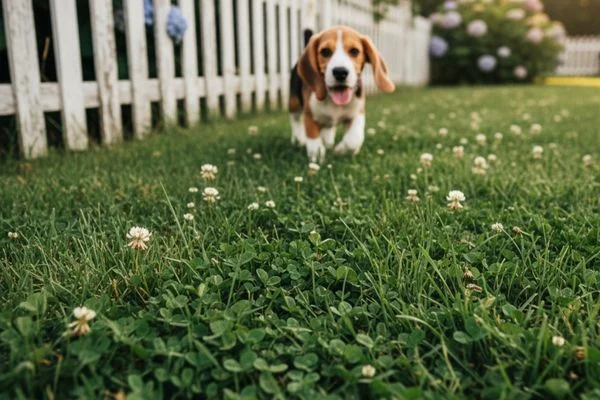
The surface of your garden will take the most wear and tear. Choose wisely.
- #### The Best Grasses for Dogs: A Resilient Lawn Is Possible. Look for grasses known for their durability and self-repairing properties.
- Kentucky Bluegrass: A popular choice for cooler climates. It’s durable and self-repairing, but it requires more water.
- Perennial Ryegrass: Germinates quickly and withstands heavy traffic, making it great for overseeding worn areas.
- Fescue (Tall and Fine): A good low-maintenance, drought-tolerant option for cooler climates.
- Bermuda Grass: The champion for warm climates. It is extremely tough, drought-tolerant, and self-repairing.
- #### Excellent Grass Alternatives
- Clover: A fantastic addition or alternative to a traditional lawn. It’s soft, stays green during droughts, and is immune to urine burn spots because it fixes its own nitrogen.
- Creeping Thyme: A beautiful, fragrant, and surprisingly durable ground cover for sunny, low-traffic areas.
- #### Non-Plant Solutions
- Artificial Turf: Modern, pet-friendly turf is a significant investment but offers a low-maintenance solution for high-traffic areas and is essential for building a Designated Dog Potty Area to protect your lawn. Look for brands with good drainage and antimicrobial properties.
Smart Planting Strategies: Elevation and Defensive Planting
- Go Vertical: Use trellises, arbors, and wall planters to grow beautiful vines and flowers vertically, keeping them safely out of reach.
- The “Guard Plant” Technique: Create a buffer around your delicate plants. Use sturdy, resilient, dog-safe plants such as ornamental grasses or hardy shrubs as a border. Your dog is much less likely to trample through a dense wall of grass to get to the single rose in the middle.
- Defensive Scents: Some dogs are deterred by the strong smell of certain safe plants. Consider planting a border of dog-safe rosemary, lavender, or sage around areas you want them to avoid.
Choosing Your Plants Wisely: The Absolute Safety-First Approach
This cannot be overstated. Beyond durability, the most critical factor in your plant selection is safety. Many of the world’s most common and beautiful garden plants are dangerously toxic to dogs. Before you bring any new plant into your garden, you must be 100% certain it is non-toxic.
- For a complete guide on what to avoid, consult our comprehensive pillar post: The Ultimate List of 30+ Common Garden Plants That Are Toxic to Dogs
Step 4: Gear and Enrichment to Save Your Garden
A happy, stimulated dog is a well-behaved dog. Sometimes, the best defense for your garden isn’t a taller fence, but a better activity to engage your dog’s mind and body.
Combating Boredom: The Power of Outdoor Puzzles
Don’t let your dog’s brain go idle. Keep a rotation of engaging, tough toys in the “Action Zone.” Outdoor puzzle feeders, snuffle mats laid out on the grass, or a simple “find the treat” game can provide crucial mental stimulation that tires a dog out just as much as physical exercise.
Satisfying the Digging Instinct: How to Build a Digging Box
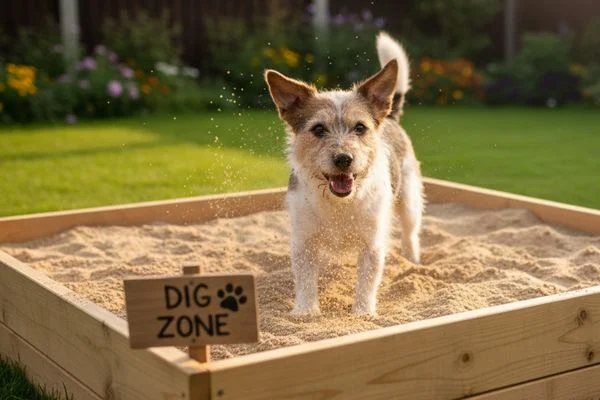
If you have a persistent digger, give them an approved place to practice their hobby!
- Construct a Frame: Use untreated lumber or a pre-made child’s sandbox to create a frame, roughly 3×3 feet or larger.
- Choose a Location: Place it in a shady, out-of-the-way spot in your yard.
- Fill it Up: Fill the box with contractor-grade play sand.
- Make it Fun: Bury some of their favorite durable toys or long-lasting chews in the sand. Show them the box and encourage them to dig there. Praise them enthusiastically when they do.
Providing Comfort and Cool: Smart Amenities
A comfortable dog is less likely to engage in destructive comfort-seeking behaviors.
- Cooling Beds: An elevated mesh cooling bed provides airflow and a comfortable spot to rest in the shade, making it far more appealing than a freshly dug hole in the dirt.
- Fresh Water Source: A dedicated, large outdoor water bowl or a pet-safe water fountain will ensure they stay hydrated and can prevent them from trying to drink from (and disturb) ponds or chemically-treated water features.
- INTERNAL LINK: For our top recommendations, check out our review of the [ The 5 Best Indestructible Outdoor Toys for Power Chewers].
Step 5: Your 5-Phase Dogscaping Project Plan
This guide provides extensive information. To make it actionable, here is a step-by-step project plan to transform your yard.
- Phase 1: Observation & Planning (1-2 Weeks): This is the most critical phase. Watch your dog. Map out their desire lines on a rough sketch of your yard. Note where they use the restroom, where they dig, and where they sleep. This map is your blueprint.
- Phase 2: The Hardscape & Boundaries (Weekend 1): This is the heavy lifting. Build your pathways, install your raised beds, and put up any decorative border fences. Define the zones physically.
- Phase 3: Groundwork & Planting (Weekend 2): Prepare your soil. Lay your chosen turf or ground cover in the Action Zone. Install your Potty Zone materials. Plant your dog-safe shrubs, flowers, and defensive borders.
- Phase 4: Introducing Your Dog (Ongoing): This is the training phase. Introduce your dog to the new layout on a leash. Guide them along the new paths. Start the potty zone training protocol. Supervise all interactions with the new garden for the first few weeks.
- Phase 5: Maintenance & Adaptation (Ongoing): Maintain your new garden. Re-seed worn patches in the lawn, refresh mulch annually, and continue to provide enrichment. Be prepared to adapt; if your dog finds a new, creative way to cause trouble, observe and adjust your design.
## Layouts for Small Backyards (The “Circuit” Design)
In a small urban yard, you don’t have space for a separate dog run. The solution is the “Perimeter Circuit.”
- The Concept: Create a 2-foot wide path of cedar mulch along the fence line (the perimeter).
- The Center: Reserve the middle for a small patch of clover or a patio table.
- Why it works: Dogs naturally patrol the fence. By giving them a designated “Patrol Path,” you save the center of your yard from being trampled.
Frequently Asked Questions (FAQ)
Q: How can I repair the yellow urine spots on my lawn?
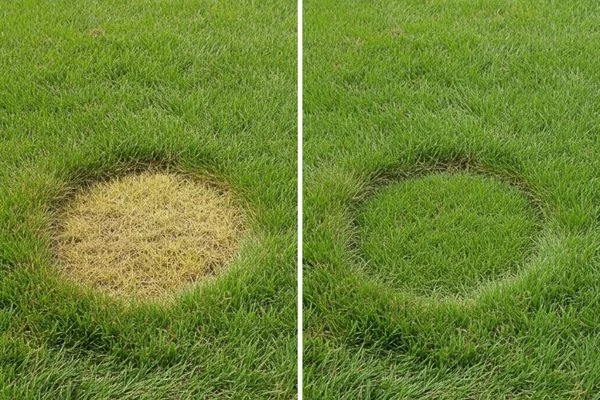
A: The burn is caused by a high concentration of nitrogen. The best immediate fix is to heavily water the spot with a hose right after your dog urinates to dilute it. For existing spots, you can purchase lawn repair kits that often include a specialized grass seed mix and soil amendments to neutralize the pH. Consistent use of a designated potty zone is the best long-term solution.
Q: What’s the best mulch to use that’s safe for dogs?
A: Always choose natural, untreated wood mulches like cedar (which has the added benefit of being an insect repellent), pine, or hemlock. Crucially, you must NEVER use Cocoa Mulch. It is made from cocoa bean shells and contains theobromine, which is toxic to dogs, just like chocolate.
Q: Can I still have a lovely vegetable garden with a dog?
A: Absolutely! This is the perfect use case for raised garden beds. They keep the delicate soil and plants contained, prevent trampling, and make it much harder for your dog to mistake your future dinner for a chew toy. Using a dedicated, fully fenced-off area is also an excellent solution for larger vegetable patches.
Q: What about water features like ponds? Are they safe?
A: Ponds can be a hazard. A curious dog could fall in, and stagnant water can harbor bacteria and parasites. If you have a pond, ensure it is covered with a sturdy safety cover or securely fenced. Alternatively, consider a safer, self-contained water feature, such as a bubbling rock or a small waterfall, with a water reservoir that is inaccessible.
Q: My dog is a senior with mobility issues. What should I consider?
A: Great question. For senior dogs, opt for gentle slopes instead of steps. Ensure pathways are wide and made of non-slip material, such as packed decomposed granite, rather than wobbly flagstone. Raised beds for food and water can reduce neck strain. Ensure there are plenty of soft, shady resting spots.
Conclusion
Creating a garden that thrives alongside your dog isn’t about restriction, constant correction, or sacrificing beauty. It is a rewarding exercise in smart, empathetic design. By understanding your dog’s instincts and creating a landscape with designated zones for play, potty, and peace, you can build a beautiful, functional, and resilient outdoor space that truly serves the needs of every member of your family.
You do not have to choose between a pristine garden and a happy dog. With the right layout, durable materials, and a little proactive planning, you can absolutely have both. Now you have the complete blueprint for how to design a garden layout that your dog won’t destroy, and you’re ready to start creating your perfect, shared paradise.