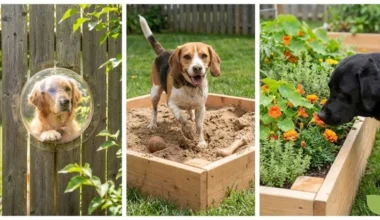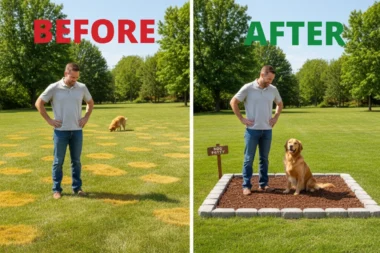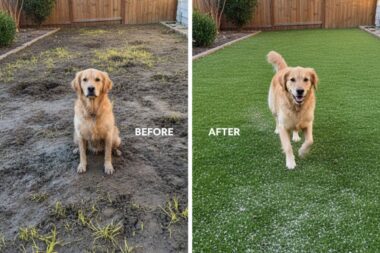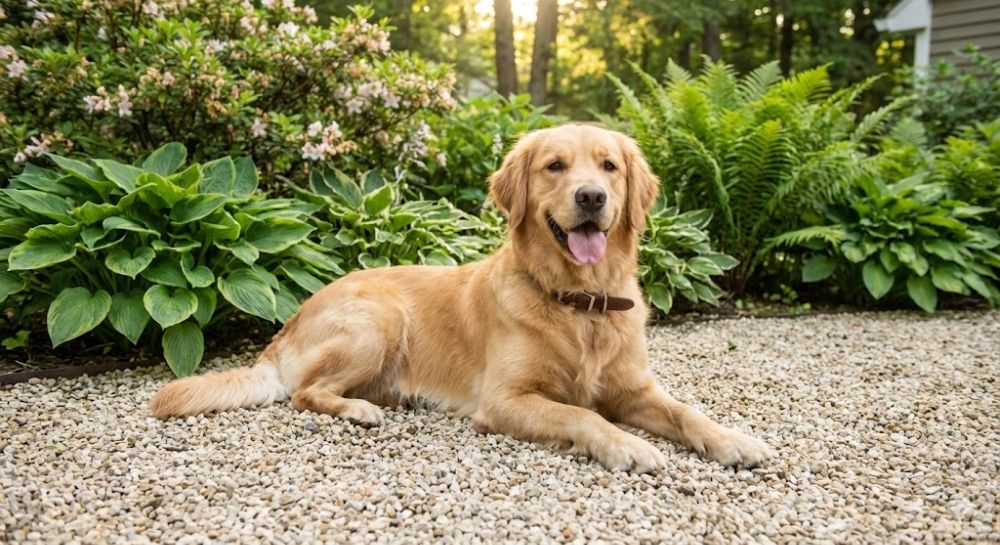
Dog friendly garden without grass featuring a happy dog resting on a clean, mud-free pea gravel patio.

How to Create a Dog-Friendly Garden Without Grass (The Ultimate No-Mud Guide)

Tired of mud and urine burns? Discover the best dog-friendly garden ideas without grass. We compare pea gravel, cedar mulch, and clover for a durable, mud-free backyard.

A dog-friendly garden without grass replaces high-maintenance turf with durable hardscaping to prevent mud and urine burns. The best alternatives are white clover (for soft greenery), pea gravel (for superior drainage), and cedar mulch (for budget-friendly paths). These materials eliminate mowing while creating a safe, texture-rich environment for active pets.

If you are tired of yellow spots and dust clouds, stopping the battle with your lawn is the most brilliant move. Here is how to implement the top 3 no-grass layouts.

Why Remove the Grass? (The Science of Dog Urine)

Before we choose a material, it is essential to understand why your lawn is failing. Dog urine is high in nitrogen. In small amounts, nitrogen is a fertilizer, but in the concentrated quantities produced by a dog, it burns grass roots chemically, similar to pouring bleach on a plant.

Furthermore, most grass species (like Fescue or Bermuda) have shallow root systems. When a 50lb dog sprints or pivots (the “zoomies”), their claws tear through the turf, creating permanent mud paths that never heal.

The only permanent solution is to switch to inorganic materials (stone) or deep-rooted plants (clover).
Option 1: The Pea Gravel Garden (Best for Drainage & Hygiene)

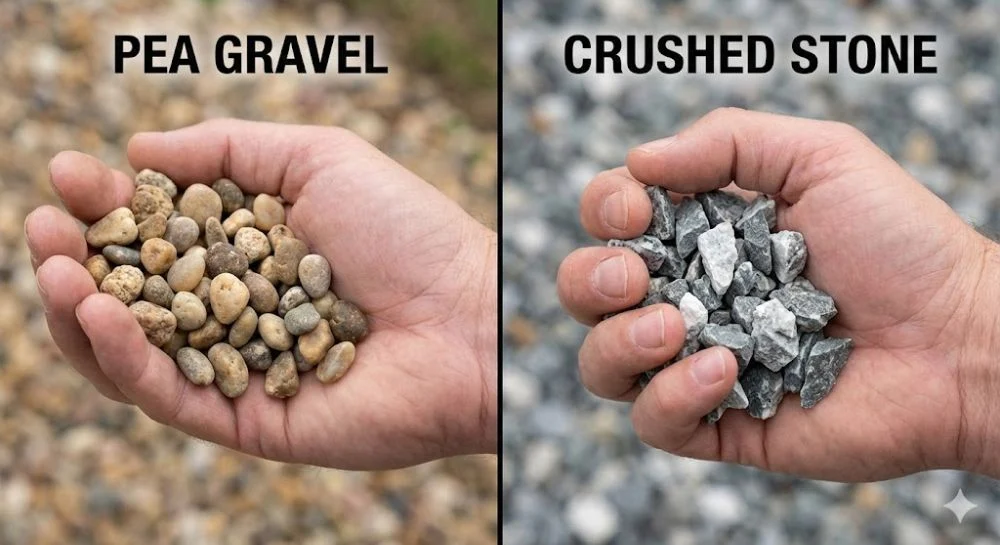
Comparison of smooth pea gravel vs sharp crushed stone for dog paw safety

If your primary concern is urine odor or mud, gravel is the superior choice. Unlike soil, gravel allows liquid to drain instantly, preventing puddles and odors.

The Right Gravel vs. The Wrong Gravel

Not all stones are safe for paws.

  • Use This: Pea Gravel. These are small, smooth, round stones (about the size of a pea, 3/8 inch). They act like a “ball pit” for your dog’s paws, providing a soft, shifting surface that is comfortable to walk on.
  • Avoid This: Crushed Granite or Driveway Rock. These have jagged, sharp edges that can cut paw pads and get stuck between toes.
  • Avoid This: River Rock. Large stones (1-3 inches) are uncomfortable to walk on and can twist an ankle (yours or the dog’s).

Installation Guide: How to Do It Right

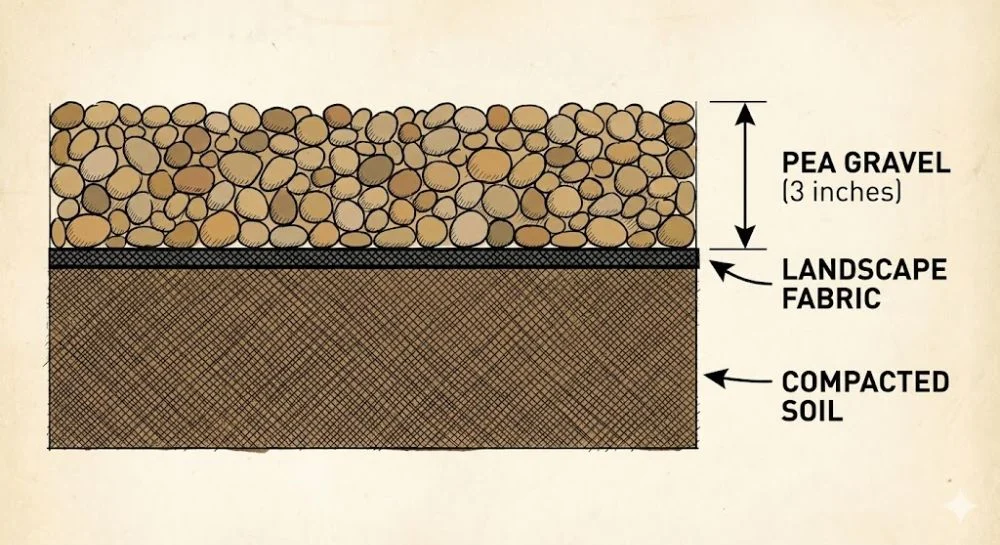
Cross section diagram showing how to install a dog friendly gravel run with drainage and landscape fabric

You cannot just dump gravel on top of grass. It will sink into the mud, and you will have a mess within months.

  1. Excavate: Dig down 3-4 inches to remove the topsoil.
  2. The Barrier: Lay down heavy-duty non-woven landscape fabric. This is critical. It separates the stone from the dirt, preventing weeds and keeping the gravel clean.
  3. The Edging: Install a hard border (steel, wood, or brick) to contain the gravel. Dogs will kick stones when they run, so a 4-inch-high border is necessary.
  4. The Fill: Pour 3 inches of pea gravel. Do not go deeper than 3 inches, or it becomes too difficult to walk through (like walking in deep sand).

Maintenance: Dealing with Smells

Gravel is easy to clean. If you notice a urine smell in summer:

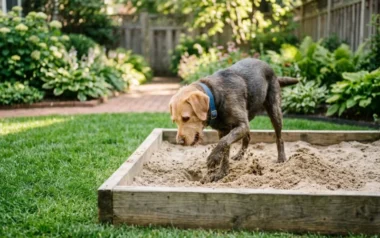
Pro Tip: If your dog likes to dig, gravel often stops them. The shifting stones collapse back into the hole, making digging unsatisfying and futile.

Option 2: The Mulch “Forest Floor” (Best Budget Option)

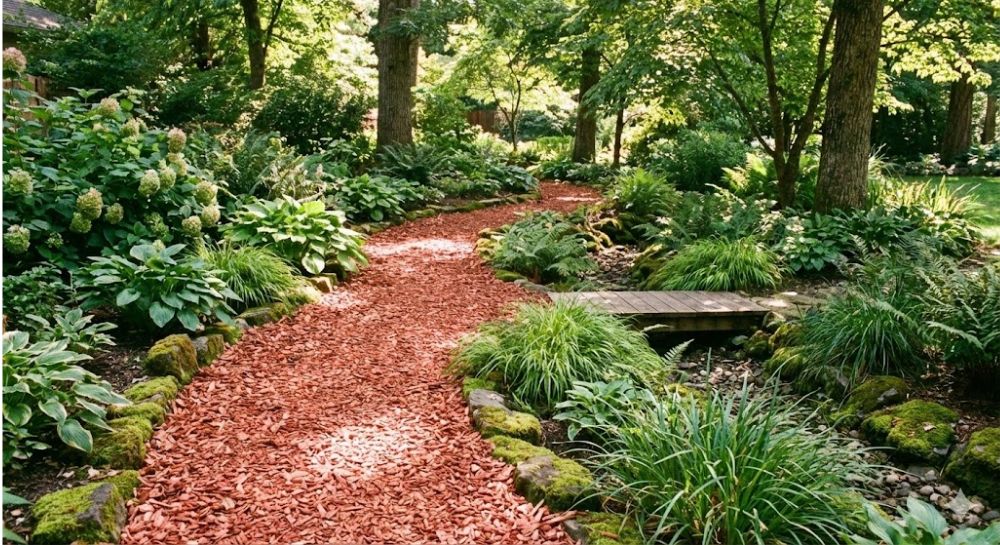
Cedar mulch garden path for dogs providing soft cushioning and flea control.

If you have a large yard and a small budget, mulch is the most cost-effective solution. It creates a natural, rustic look that mimics a forest floor—a dog’s natural environment.

Critical Safety Warning: Choose the Right Wood

Before buying bulk mulch, you must verify the wood type.

  • Toxic Danger: Never use Cocoa Bean Mulch. It smells like chocolate but contains theobromine, which is highly toxic to dogs if ingested. It causes seizures and heart issues.
    See our guide on : Toxic Plants for Dogs
  • Physical Danger: Avoid “dyed” mulches or pallets, which may contain chemical preservatives or sharp splinters.
  • The Best Choice: Cedar Mulch. Cedar has natural oils that repel fleas, ticks, and mosquitoes. It is soft, smells great, and is safe if a dog accidentally chews on a piece.
  • Alternative: Playground Chips (Engineered Wood Fiber). These are certified safe for playgrounds and are designed not to splinter.

Installation & Cost

Mulch is significantly cheaper than gravel. You can often get free wood chips from local arborists (ChipDrop), though you cannot guarantee the wood type with free services.

  • Depth: Spread mulch at least 4-6 inches deep. This thick layer suppresses weeds and provides a cushion for jumping dogs.
  • Edging: Like gravel, you need a barrier to keep mulch out of your flower beds.

The Downside: Maintenance

Mulch is organic, meaning it decomposes.

  • Refill: You will need to add a fresh top layer (about 1 inch) every spring.
  • Cleanliness: Mulch can stick to long-haired dogs. If you have a Golden Retriever or Doodle, expect to sweep inside the house.

Option 3: The White Clover Lawn (Best for “Green” Lovers)

Cedar mulch garden path for dogs providing soft cushioning and flea control.

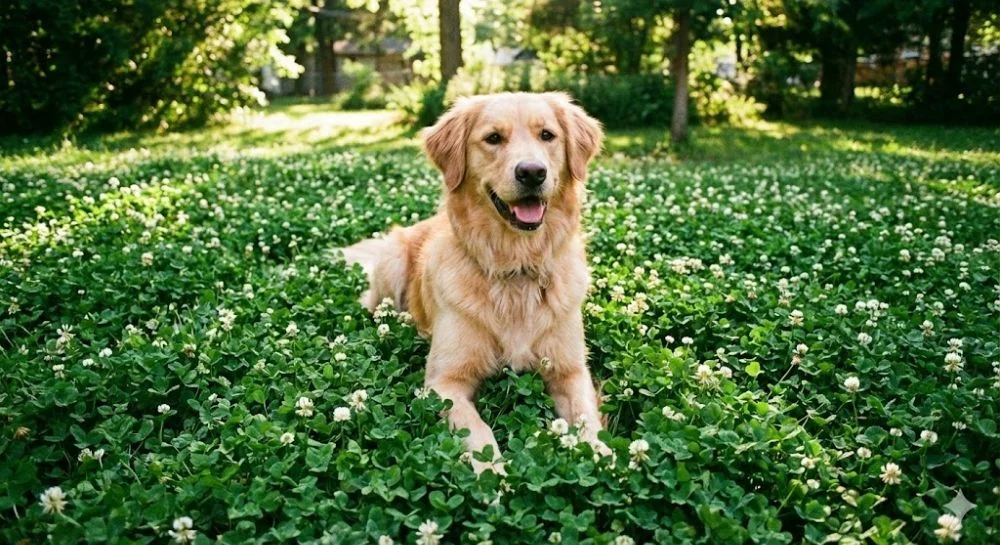
If you can’t bear to lose the green look but are tired of yellow spots, switch from grass to Dutch White Clover.

Clover is often considered a weed, but for dog owners, it is a miracle plant.

  • Urine Resistant: Clover is immune to nitrogen burn. It actually uses the nitrogen to grow greener. It will not turn yellow when dogs pee on it.
  • Durable: It has a dense root system that withstands running better than standard turf.
  • Soft & Cool: It feels softer than grass on bare feet and stays cool in the summer heat.

How to Transition to Clover

You don’t need to dig up your whole lawn.

  1. Scalp the Grass: Mow your existing lawn as short as possible.
  2. Seed: In early spring or fall, broadcast Dutch White Clover seed over the lawn.
  3. Water: Keep it moist for 10 days.
  4. The Takeover: The clover will sprout and eventually choke out weeds and weak grass, leaving you with a lush, green carpet that requires no fertilizer and minimal mowing.

Comparison: Which Material is Right for You?

FeaturePea GravelCedar MulchWhite Clover
Initial CostHigh ($5-$10/sq ft)Low ($1-$3/sq ft)Low (Seeds are cheap)
DurabilityIndestructibleMedium (Decomposes)High (Self-healing)
Urine DrainageExcellentGoodGood (Absorbs it)
Paw ComfortGood (If smooth)ExcellentExcellent
MaintenanceRaking smoothAnnual RefillNo mowing, just water
Mud FactorZero MudLow MudLow Mud

Conclusion: Start with a “Potty Zone”

You don’t have to bulldoze your entire yard this weekend. If you are hesitant, start by converting just one section—like the side yard or a 10×10 corner where your dog usually does their business.

Creating a Designated Dog Potty Area with pea gravel is a low-risk project that can help protect the rest of your lawn. If you like the result, you can expand it to the rest of the garden later.

By removing the grass, you remove the stress. You gain a garden that looks cleaner, smells better, and lets your dog be a dog without ruining the landscape.

You May Also Like