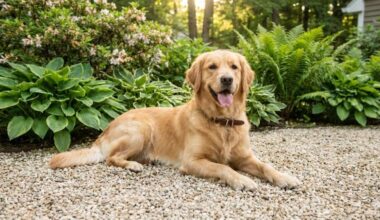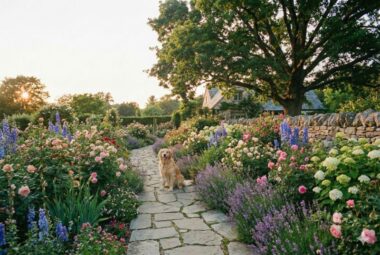
The most effective Dog-Friendly Landscaping Ideas focus on designing a garden that accommodates a dog’s instincts rather than fighting them. Successful designs diagnose the dog’s personality type—The Patroller (fence runners), The Digger (excavators), or The Chewer (plant eaters)—and implement specific hardscaping solutions like perimeter paths, hardware cloth barriers, and non-toxic sensory gardens to prevent destruction while ensuring safety.
Why Generic Garden Advice Fails
Most dog owners make the same mistake: they try to train their dog to stop being a dog. They yell “No!” when the dog barks at the mailman or digs up the petunias. But you cannot fight biology.
If you have a terrier, they were bred for 200 years to dig for vermin.2 If you have a shepherd, they were bred to patrol perimeters. When you plant delicate flowers in their “work zone,” you are setting them up for failure.
The secret to a pristine yard isn’t better training—it’s smarter design. By identifying your dog’s “Garden Personality,” you can build a landscape that coexists with their habits. This guide will help you diagnose your dog and build the perfect solution.
Personality Type 1: The Patroller (The Fence Runner)
Does your dog sprint back and forth along the fence line? Do they bark at neighbors, cars, or squirrels?
The “Patroller” destroys grass along the perimeter of the yard. They create a muddy, rutted track that turns into a dust cloud in summer and a swamp in winter. If you plant flowers against the fence, a Patroller will trample them in seconds.
The Solution: The “18-Inch Rule.”
Stop trying to grow grass where your dog wants to run. Instead, legitimize their job.
1. Create a “Patrol Path.”
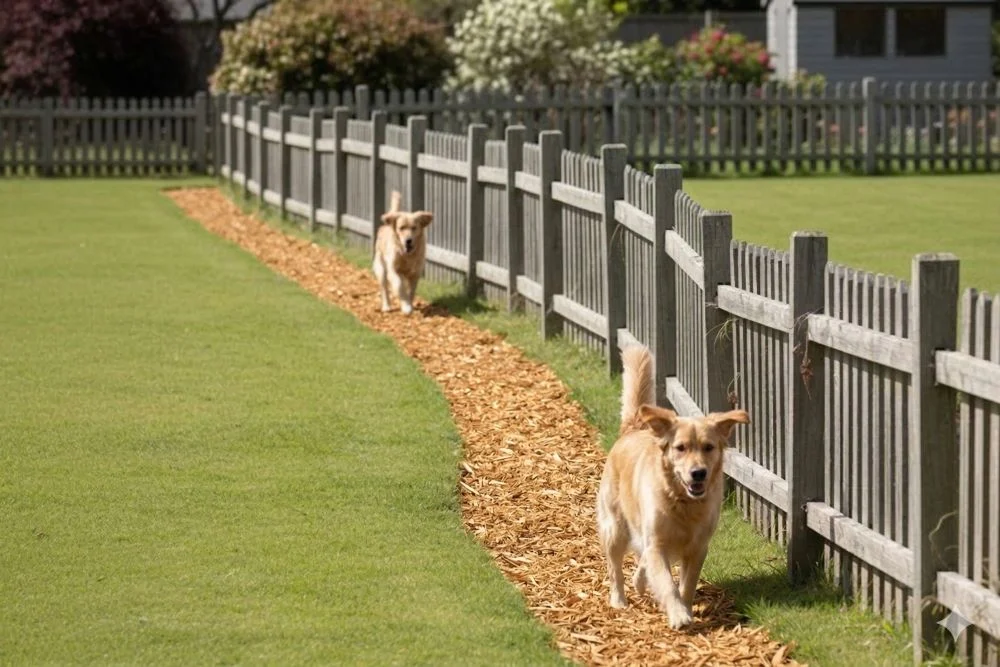
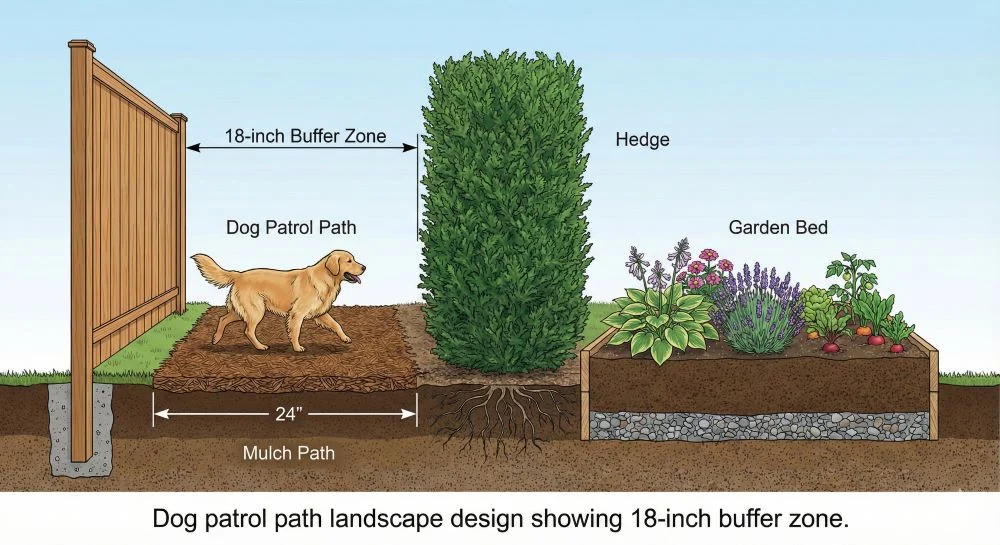
Leave a dedicated buffer zone of 18 to 24 inches along the entire fence line. Do not plant grass here. Instead, install durable materials like Cedar Mulch (which is soft on paws) or Pea Gravel (which offers excellent drainage). These materials prevent the “mud track” effect and keep your home cleaner.
- Best Material: Cedar Mulch (soft on paws) or Pea Gravel (excellent drainage).
- Avoid: Grass (will die) or sharp stone.
2. The “Buffer” Planting Strategy
Start your actual garden bed after the patrol path. Use sturdy, non-toxic shrubs to create a visual barrier.
- The Layering Technique: Fence -> 2ft Mulch Path -> Row of Boxwoods or Arborvitae -> Delicate Flowers.
- Why it works: The shrubs hide the dog from view (reducing visual stress) and hide the muddy path from your patio. The dog gets to keep their “job,” and you get to keep your flowers.
Pro Tip: The “Window” Hack.
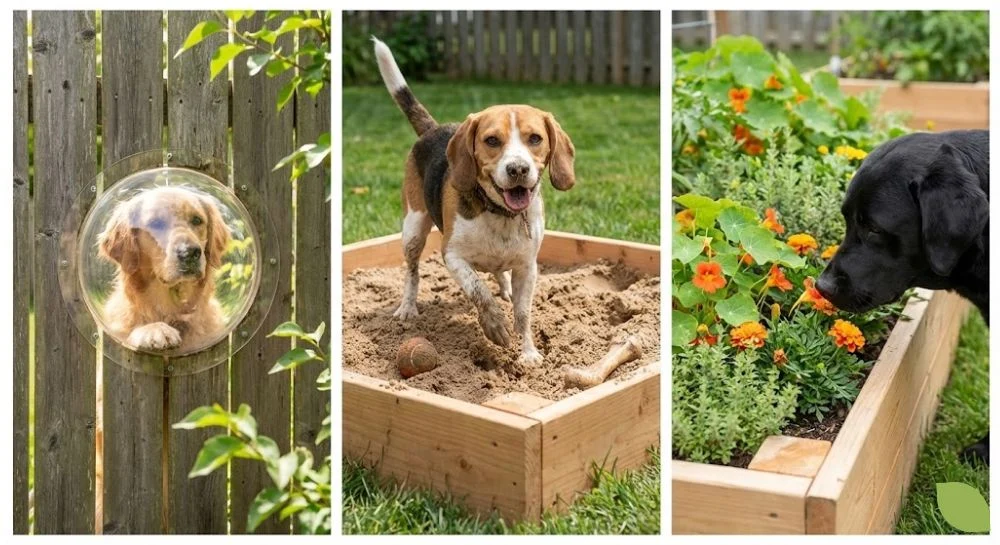
If your dog jumps at the fence to see out, they are experiencing “Barrier Frustration.” Consider installing a Pet Peek (a bubble window) or using a lattice insert in your wooden fence. If they can see the threat, they often stop jumping to get a better look.
Personality Type 2: The Digger (The Excavator)
Does your dog leave craters in your lawn? Do they hunt for moles or bury bones?
Digging is often a sign of boredom or energy. While barriers work, you must also address the behavior. For a full breakdown of behavioral fixes, read our guide on How to Stop Your Dog From Digging Up Flower Beds. If you need a physical barrier immediately, use the Hardware Cloth method below.
Solution A: The “Underground Fortress” (Hardware Cloth)
If your dog digs in your flower beds, you need a physical barrier that they cannot defeat.
- Excavate: Remove the top 2 inches of soil from your garden bed.
- Install Mesh: Lay down sheets of Hardware Cloth (metal wire mesh with 1/2 inch squares). Do not use Chicken Wire (it is too flimsy and can cut paws).
- Secure: Pin the mesh down with Garden Staples.
- Cover: Cover the mesh with mulch or topsoil.
- Planting: When you need to plant a new shrub, just use tin snips to cut an “X” in the mesh and dig through it.
Why this works: When the dog tries to dig, their claws hit the metal barrier. It feels unpleasant and impenetrable. They quickly learn that digging in that spot is useless.
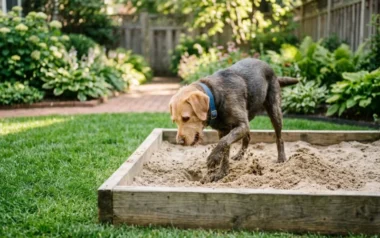
Solution B: The “Yes” Pit (Redirection)
You can’t stop the instinct, but you can move it.
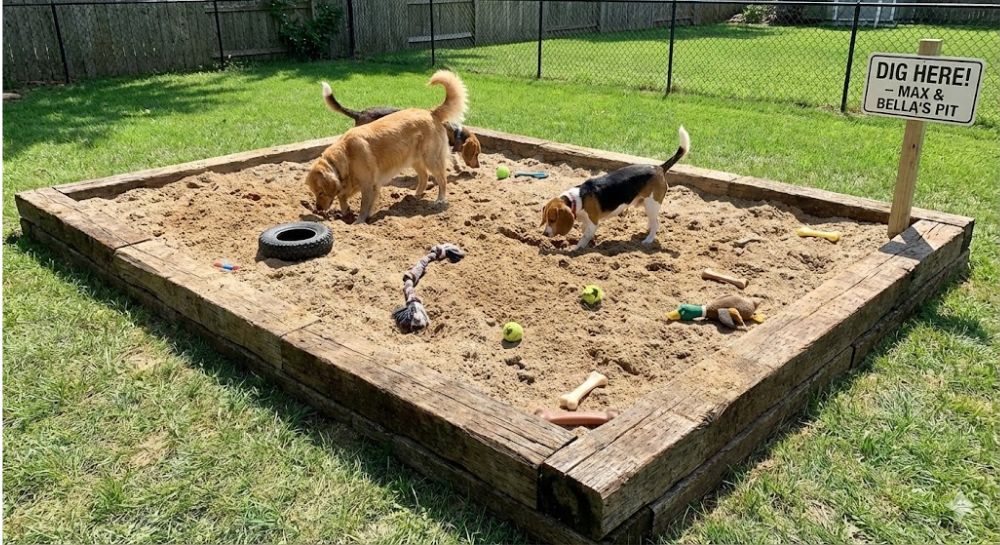
- Build a Sandbox: Use landscape timbers to build a 4×4 box in a shaded corner.
- The Right Sand: Use “Play Sand” (clean and screened).
- The Bait: Bury their favorite toys, bones, or treats inside the sand.
- The Training: Whenever they dig in the lawn, say “No,” lead them to the sandbox, and encourage them to dig there. When they find the hidden treat, praise them heavily.
Personality Type 3: The Chewer (The Taster)
Does your dog eat leaves, sticks, or mulch? Do they graze like a cow?
This is the most dangerous personality type. A Patroller ruins your grass; a Chewer can ruin their liver.
The “Safe Zone” Audit
You must assume everything in your yard will end up in their stomach. First, cross-reference your current garden with our Ultimate Guide to Toxic Plants for Dogs. If you have Sago Palms or Azaleas, remove them. Instead, fill your beds with 15 Beautiful Flowers That Are Completely Safe for Dogs, like Zinnias and Sunflowers.
- Remove the “Big 3”: If you have Sago Palms, Azaleas, or Oleander, remove them immediately. These are highly lethal even in small doses.
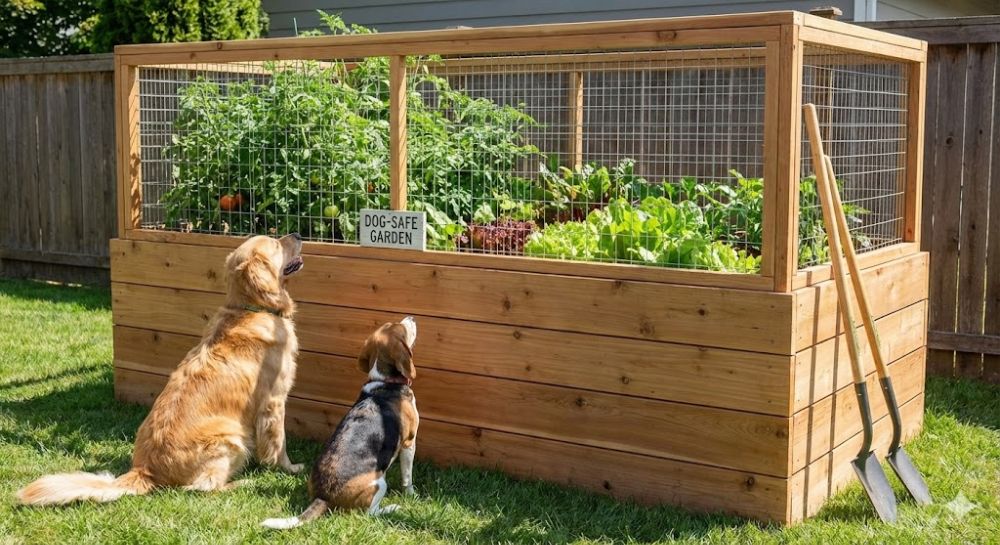
- Raised Beds: If you love toxic plants (like Hostas or Hydrangeas), they must be planted in Raised Garden Beds that are at least 24 inches high. This lifts the “buffet” out of eye level.
Safe vs. Toxic Quick Reference
| Plant Category | SAFE (Plant This) | TOXIC (Avoid This) |
| Flowers | Zinnias, Marigolds, Sunflowers, Petunias | Lilies (especially for cats), Tulips, Daffodils |
| Shrubs | Camellias, Bottlebrush, Forsythia | Azalea, Rhododendron, Boxwood (mild) |
| Ground Cover | Creeping Thyme, Clover, Sedum | English Ivy, Vinca Minor |
Pro Tip: The “Bitter” Deterrent.
For a Chewer, new plants are tempting because they smell like nursery fertilizer. Mix a solution of 2 parts water to 1 part Apple Cider Vinegar (or buy “Bitter Apple Spray”) and mist the leaves of new plants. One taste is usually enough to teach them that “Green = Yuck. However, a chewer still needs an outlet for their energy. Once you deter them from your plants, redirect their attention by providing indestructible outdoor dog toys to keep them safely occupied.
Universal Upgrades: The Sensory Garden
Regardless of your dog’s personality, every dog-friendly garden should include “Enrichment.” A bored dog is a destructive dog.3 A Sensory Garden stimulates all 5 senses, tiring them out mentally so they don’t chew your deck.
1. Smell (The Nose Work Zone)
Dogs “see” with their noses. Plant Dog-Safe Herbs like Rosemary and Mint along the paths where they brush against them.
- Rosemary & Lavender: Tough, drought-tolerant, and smell amazing.
- Mint: Fast-growing (keep it in a pot, or it will take over!).
- Lemongrass: Safe for dogs and repels mosquitoes.
2. Touch (Texture Variety)
Vary the surface materials.
- Cooling Zone: Place large, flat flagstones in the shade. These stay cool in summer and give dogs a place to “sploot.”
- Soft Zone: A patch of Dutch White Clover or sturdy ornamental grass (like Maiden Grass) that swishes when they walk through it.
3. Sound
- Bamboo: (Non-invasive clumping varieties) creates a soothing rustling sound.
- Water Feature: A small bubbling fountain isn’t just for drinking; the sound masks street noise, which can help reduce barking for “Patroller” dogs. Ensure you have a Durable Outdoor Water Fountain so they stay hydrated during play.
The “Potty Zone”: Saving Your Lawn
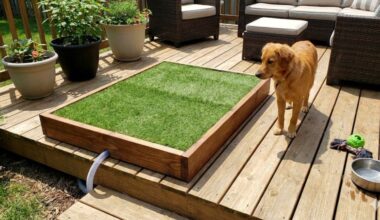
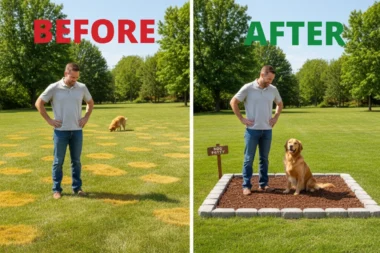
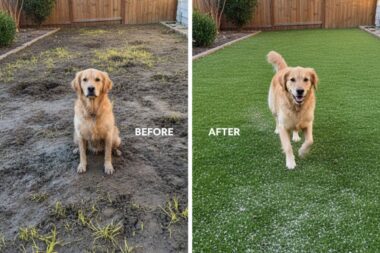
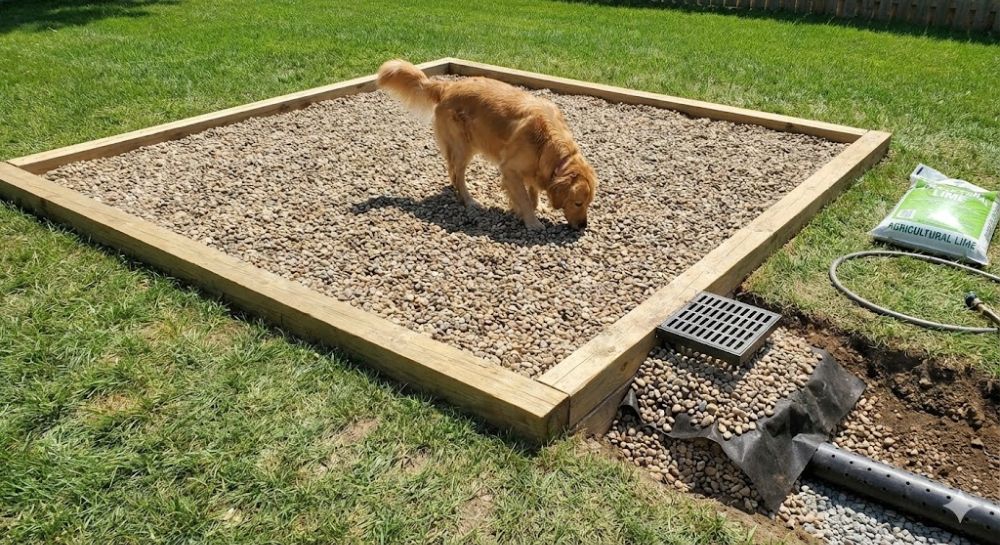
Nothing ruins a garden faster than Nitrogen Burn (yellow spots from urine). The only permanent solution is to build a Designated Dog Potty Area using gravel or artificial turf. This trains your dog to go in one spot, saving the rest of your grass.
How to Build It
- Location: Choose a hidden corner away from the patio (smell control).
- Material: Use Pea Gravel or River Rock. Do not use mulch (it absorbs the smell).
- Drainage: Ensure you dig down 4 inches and add a base layer of crushed rock so urine flows away instantly.
- The Fire Hydrant Hack: Install a vertical post (a piece of driftwood or a fake fire hydrant). Male dogs instinctively want to mark vertical objects. If you give them a target in the gravel zone, they will stop marking your expensive shrubs.
Maintenance Hack: Buy a gallon of Enzymatic Yard Cleaner (like Simple Green Outdoor Odor Eliminator). It attaches to your hose. Spray the gravel zone once a week in summer to eat the bacteria that cause the ammonia smell.
Implementation Plan: Start Small
You don’t need to bulldoze your yard this weekend. Start with the problem that annoys you the most.
- Is it Mud? Build the “Patrol Path” first using mulch.
- Is it Holes? Install the Hardware Cloth in your favorite flower bed.
- Is it worry? Remove the Azaleas and plant Sunflowers.
By designing for the dog you have, not the dog you wish you had, you create a space where you can both relax.
Frequently Asked Questions (FAQ)
What is the best ground cover for dogs that pee everywhere?
White Clover and Pea Gravel are the best options. Clover is immune to nitrogen burn and won’t turn yellow. Pea gravel allows urine to drain instantly into the soil, preventing smells and dead patches.
How do I stop my dog from running a path in the grass?
You cannot stop it, so you should pave it. Dogs are creatures of habit. If they have worn a path, accept it as their “highway.” Cover it with mulch, gravel, or stepping stones to turn the mud into a deliberate design feature.
Are Boxwoods poisonous to dogs?
Yes, Boxwoods are mildly toxic.4 They contain alkaloids that cause vomiting and diarrhea if large amounts are eaten. However, most dogs find them unpalatable. If you have a severe “Chewer,” avoid them; for most dogs, they are safe perimeter hedges.
Final Thoughts
Your garden should be a sanctuary, not a battleground. Whether you have a frenetic Patroller or a determined Digger, there is a landscape solution. For more budget-friendly ideas on materials.