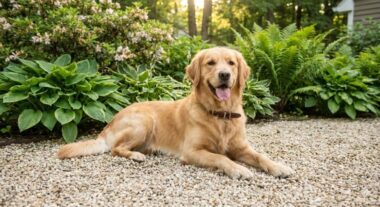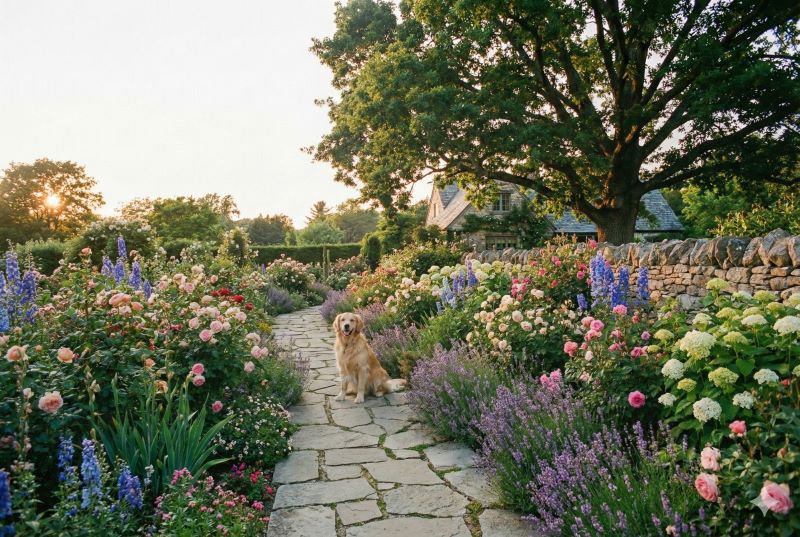
Dog-Friendly Garden Ideas prioritize safety and durability. A perfect design combines non-toxic plants (avoiding Hostas), paw-resistant ground covers like clover, and designated potty zones. This strategy protects your lawn from urine burns and digging while ensuring your pet has a stimulating, secure environment.
Quick Reference: Dog-Friendly Garden Safety Checklist
Use this table to identify safe materials and plants for your yard quickly.
| Garden Zone | Key Safety Rule | Recommended Solution |
| Ground Cover | Must be non-toxic & durable | Clover or Cedar Mulch (No Cocoa Mulch!) |
| Flower Beds | Protect from digging/urine | Raised beds or driftwood barriers |
| Potty Area | Needs drainage | Pea Gravel or Artificial Turf |
| Plants | No thorns or cardiac toxins | Sunflowers, Zinnias, Marigolds |
1. Plant Safety: What to Grow and What to Avoid
Before planting, you must audit your garden for toxicity. Many familiar favorites are dangerous, while others are perfectly safe.
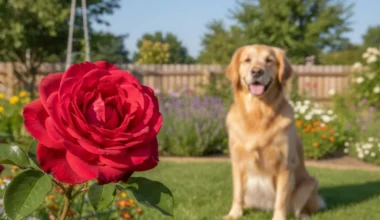
- The Dangers: The most critical step is identifying risks. For example, Are Hostas Poisonous to Dogs? Yes, they are toxic. However, other thorny plants are nuanced; see our guide, “Are Roses Poisonous to Dogs?“ to understand the physical risks of thorns.
- The Safe List: To fill your garden with color without worry, review our list of 15 Beautiful Flowers That Are Completely Safe for Dogs.
- Edible Gardens: If you grow food, stick to a Vet-Approved List of 10 Dog-Safe Herbs.
- Full Audit: For a comprehensive check, print out our Ultimate Guide to 25+ Toxic Plants for Dogs.
2. Designing a Dog-Proof Layout (Hardscaping)
A durable garden starts with the ground you walk on. You need materials that can withstand running, digging, and urine.
- The Foundation: Start by reading The Ultimate Guide to Designing a Garden Layout Your Dog Won’t Destroy.
- Ground Cover: Grass often fails in high-traffic zones. Consider The 5 Best Dog-Safe Ground Covers (like clover or mulch) as a durable alternative.
- Pathways: Direct your dog’s traffic flow to prevent trampling. Here are 4 DIY Dog-Friendly Garden Path Ideas on a Budget.
- Fencing: Security is paramount. We reviewed The 5 Best Types of Fencing for a Dog-Friendly Yard to keep your pet secure.
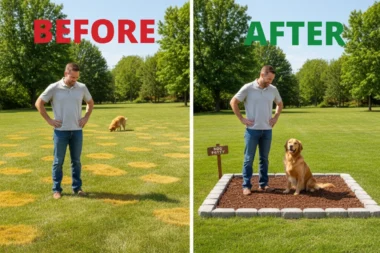
- Sanitation: Save your lawn from burn marks by learning How to Create a Designated Dog Potty Area.
3. Garden Protection & Behavior Management
Even with a perfect layout, dogs will be dogs. You need strategies to protect your hard work without using harsh chemicals.
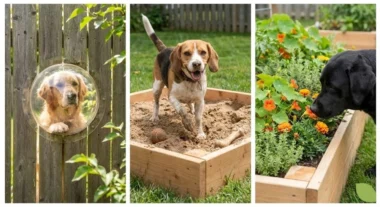
- Barriers: If your pet loves snacking on your crops, see How to Protect Your Vegetable Garden from Your Dog.
- Deterrents: Instead of chemical sprays, use 5 Natural Dog Repellents to Keep Your Dog Out of Flower Beds.
- Digging: Is your yard full of holes? Read our guide on 7 Humane Ways to Stop Your Dog from Digging Up Flower Beds.
4. Outdoor Essentials: Water, Rest & Play
A dog-friendly garden is also a living space. Ensure your dog is comfortable and entertained to reduce the likelihood of destructive behavior.
- Hydration: Fresh water is vital. We reviewed The Best Outdoor Water Fountains for Dogs.
- Rest: Provide a comfortable spot off the dirt with The 5 Best Durable Dog Beds for Outdoor Patios.
- Entertainment: Bored dogs destroy gardens. Keep them occupied with The 5 Best Indestructible Outdoor Toys for Power Chewers.
Ideas for Every Budget & Yard Size
Not everyone has an acre of land or a professional landscaping budget. Here is how to adapt these designs to your specific situation.
Dog-Friendly Garden Ideas for Small Backyards
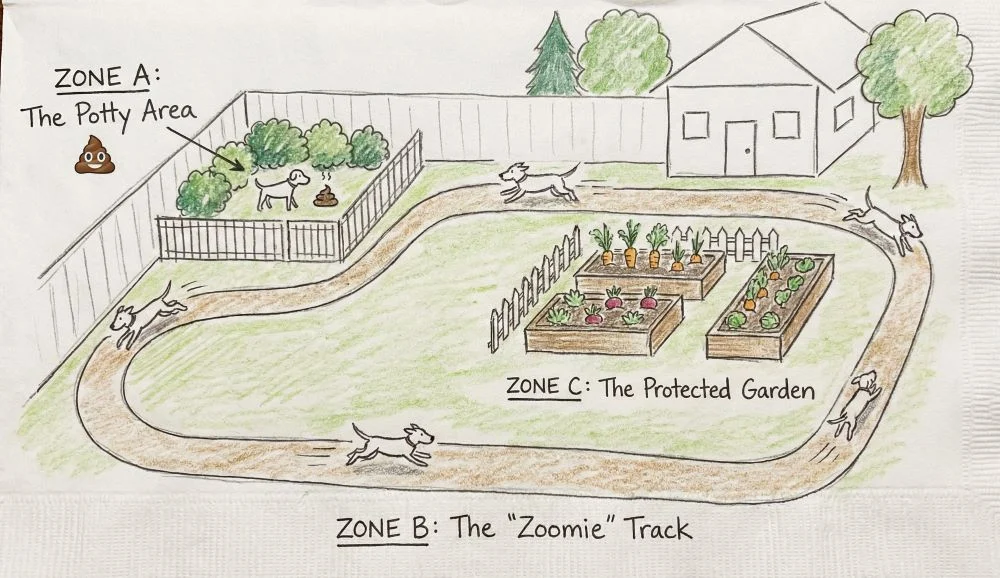
In a small space, verticality is key. Use raised planter boxes to keep toxic plants out of reach without losing floor space. Create a “circular track” around the perimeter of the yard using cedar mulch; this gives your dog a dedicated running path without damaging the center of your small lawn.
Dog-Friendly Garden Ideas on a Budget
You don’t need expensive stone pavers.
- Cheap Paths: Use wood chips (often free from local arborists) instead of stone.
- DIY Fencing: Use chicken wire hidden behind shrubs instead of expensive vinyl fencing.
- Repurpose: Turn an old hard-shell kiddie pool into a DIY Outdoor Dog Water Station.
Dog-Friendly Garden Without Grass
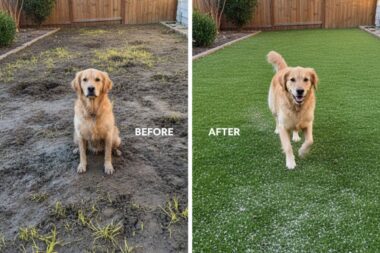
If your dog has already destroyed the lawn, stop fighting it. A “No-Grass Garden” is often cleaner and easier to maintain.
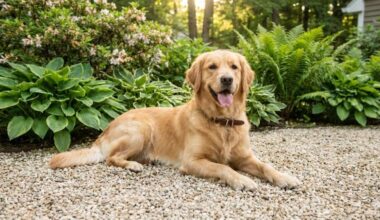
- Gravel Gardens: Use pea gravel (smooth, round stones) for excellent drainage.
- Clover Lawns: Switch to White Clover, which is tougher than grass and immune to urine burns.
- Mulch Zones: Cover the entire area in heavy mulch for a rustic, mud-free look.
If you are struggling with mud, check out our guide on Dog Friendly Garden Ideas Without Grass to see if gravel or clover is right for you
Frequently Asked Questions
Q: What is the most durable ground cover for dogs?
A: White clover and cedar mulch are the best options. White clover is urine-resistant, soft on paws, and doesn’t turn yellow like grass. Wood chips (specifically cedar or pine) are excellent for high-traffic paths because they provide drainage and prevent mud. Warning: Never use cocoa bean mulch, as it is highly toxic to dogs.
Q: How do I keep my dog out of my flower beds without a fence?
A: Use natural scent deterrents or texture barriers. Dogs dislike the smell of citrus, vinegar, and coffee grounds, so scattering orange peels can help. For diggers, bury chicken wire or large river rocks just below the soil surface; dogs hate the sensation on their claws and will usually stop digging.
Q: Can I use mothballs to keep dogs away from plants?
A: NO. Never use mothballs in a garden with pets. Your search data shows people ask this, but you must warn them: Mothballs contain naphthalene or paradichlorobenzene, which are lethal toxins to dogs. Ingesting or even sniffing them closely can cause seizures and liver failure.
Q: Are Hostas poisonous to dogs?
A: Yes, Hostas are toxic to dogs. The entire plant contains saponins, which cause drooling, vomiting, and diarrhea if chewed or ingested. While rarely fatal, they can cause significant distress. If you have a puppy or a “chewer,” it is best to remove Hostas or plant them inside a raised, fenced pot.
Q: Are Roses poisonous to dogs?
A: No, rose petals and stems are non-toxic. However, they still pose a risk due to their thorns, which can scratch eyes or puncture paws. The bigger danger with roses is often the fertilizers and systemic pesticides used on them, which can be poisonous if your dog eats the soil or leaves.