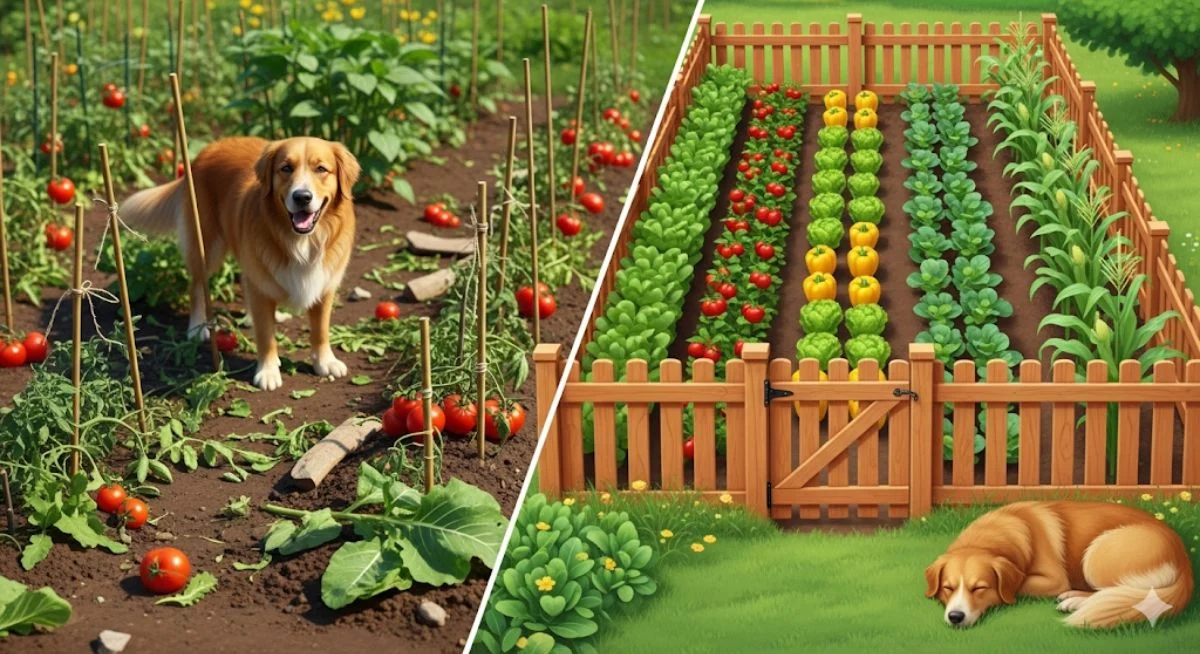
There’s nothing quite like the taste of a sun-ripened tomato picked straight from your own garden. But there’s also nothing quite as frustrating as discovering your dog got to it first, leaving behind a half-eaten mess and a trail of freshly dug-up soil.
If that scene is familiar, you know the dual challenge of protecting your harvest while keeping your pet safe. Learning how to protect your vegetable garden from your dog is the key to a peaceful and productive coexistence.
This comprehensive guide will break down a range of humane and effective strategies, from critical safety checks and simple deterrents to the best types of physical barriers. Our goal is to help you enjoy both your pet and your produce in harmony.
First, A Critical Safety Note: Is Your Vegetable Garden Dog-Safe?

Before we focus on protecting the plants from the dog, we must first protect the dog from the plants. Many new dog owners are surprised to learn that parts of very common garden vegetables are toxic. Your dog’s destructive chewing isn’t just a threat to your harvest; it can be a serious threat to their health.
Here is a breakdown of common risks to be aware of:
- Nightshade Plants (Tomatoes, Potatoes, Eggplants): The ripe, red tomato fruit itself is generally considered safe for dogs in small amounts. However, the green parts of the plant—the vines, leaves, stems, and unripe green fruit—contain a substance called solanine. This is toxic to dogs and can cause severe gastrointestinal distress, lethargy, and weakness. Similarly, the green leaves and stems of potato plants are toxic, as are any potatoes that have turned green.
- Allium Family (Onions, Garlic, Leeks, Chives): All members of this family are toxic to dogs, whether raw, cooked, or powdered. They contain compounds called thiosulfates, which can cause oxidative damage to a dog’s red blood cells. This leads to a serious condition called hemolytic anemia. For this reason, dogs must be kept away from onion and garlic patches.
- Rhubarb: The stalks of rhubarb are used in cooking. In contrast, the large leaves are highly toxic to both humans and dogs. They contain soluble calcium oxalate crystals, which can cause a drop in blood calcium, tremors, and even acute kidney failure.
This is not a complete list. To get a comprehensive overview of plant safety in your entire yard, it’s essential to consult our main pillar post: The Ultimate List of 30+ Common Garden Plants That Are Toxic to Dogs.
For urgent help or a searchable database, the ASPCA Animal Poison Control Center is an excellent and authoritative resource.
Level 1: Management and Deterrents (The Easy First Steps)
Sometimes, the simplest and least expensive solutions can be surprisingly effective. Before you build a fortress around your veggies, try these low-effort strategies. They are designed to make your vegetable garden a much less appealing target for your curious pup.
Create a “Sacrifice” Patch
This strategy is based on positive redirection. Instead of only saying “no,” you provide an enthusiastic “yes” in a different location. The idea is to plant a small, easily accessible patch of dog-safe and tasty plants specifically for your dog, located away from your main vegetable garden. When you see your dog showing interest in your vegetable patch, you can redirect them to their own special garden. This works wonders for dogs who are more interested in grazing than digging. For example, you could plant a small border with things like:
- Carrots: Many dogs love the taste and crunch.
- Green Beans: Easy to grow and a healthy snack.
- Mint or Basil: These herbs are safe, and their strong scent can be an engaging distraction.
Use Scent and Taste to Your Advantage
A dog’s powerful sense of smell can be used to your advantage. You can create a natural, humane boundary using scents and tastes that dogs find unpleasant but are harmless to your garden.
- Citrus Deterrent: Most dogs dislike the strong smell of citrus. You can scatter fresh orange, lemon, or grapefruit peels around the perimeter of your vegetable patch. Alternatively, you can create a simple spray by steeping citrus peels in hot water, letting it cool, and then misting it on the leaves of the plants you want to protect.
- Spicy Deterrent: A light dusting of cayenne pepper on the soil around your plants can also be effective. Dogs will sniff the ground before digging, and the spicy scent is a strong deterrent. A diluted cayenne pepper spray can also be used on plant leaves. However, use this sparingly and be careful not to get it in your dog’s eyes.
- Bitter Sprays: You can purchase commercial bitter-tasting but non-toxic sprays from pet stores. These are designed to taste unpleasant, teaching your dog that chewing on garden plants is not a rewarding experience.
Make the Garden Bed Uninviting
This strategy focuses on making the area around your vegetables physically uncomfortable or uninteresting to your dog. If your dog is walking through your garden bed, you can create a perimeter using textures they dislike. For instance, a border of prickly (but not sharp) pinecones or sweet gum balls can be an effective deterrent. You can also purchase “scat mats,” which are flexible plastic mats with small, harmless plastic spikes. Laying these on the soil between your plant rows can make the area an unpleasant place to stand or lie down.
Level 2: Building Effective Barriers (The Best Long-Term Solution)
For a truly worry-free harvest, nothing beats a good physical barrier. A barrier makes the garden completely inaccessible, which removes the temptation altogether. This is the most effective long-term solution, especially for persistent diggers or determined veggie thieves.
The Raised Garden Bed Advantage
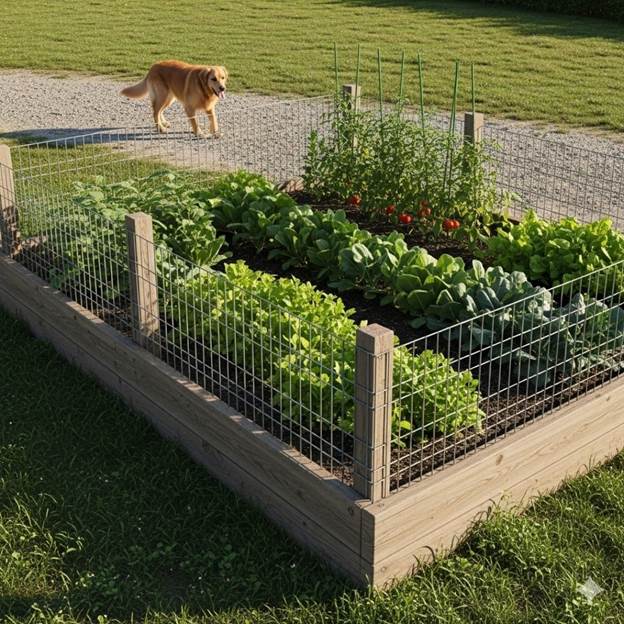
Simply elevating your garden is often the simplest and most effective barrier. A raised garden bed, built to a height of 18-24 inches, lifts the tempting soil and tasty vegetables out of a dog’s casual path and digging zone. While a determined large dog could still jump into it, a raised bed presents a clear physical and psychological boundary. It signals that this area is different from the rest of the yard. Furthermore, it provides excellent drainage and is more ergonomic for you to work in. You can build a simple frame from untreated cedar or pine, or buy one of the many easy-to-assemble kits available online or at garden centers.
Low Fencing: Creating a Clear ‘No-Go’ Zone
You don’t need a six-foot privacy fence to protect your vegetables. A simple, low fence is often all that is needed to create a clear “no-go” zone. The key is to make it sturdy enough to withstand a curious nudge from your dog’s nose.
- Wire Mesh Fencing: This is a very affordable and effective DIY option. You can buy rolls of wire mesh (like hardware cloth or chicken wire with small openings) and attach it to simple stakes or T-posts hammered into the ground around your garden patch. A height of 2-3 feet is usually sufficient.
- Decorative Borders: Many garden centers sell low, decorative border fences made of metal or wood. These picket-style or hoop-style borders are easy to install and can add a charming, cottage-garden look while also keeping your dog out.
- Garden Netting: For protection against dogs that are more likely to nibble than dig, lightweight bird netting draped over hoops can be an effective and inexpensive solution that still allows for plenty of sun and rain to get through.
Choosing the right fencing materials is key to longevity and durability. For a deep dive into the pros and cons of different materials that can also be used for your main yard, see our guide to the 5 Best Types of Fencing for a Dog-Friendly Yard.
The Full Enclosure: A Walk-in Garden Fortress
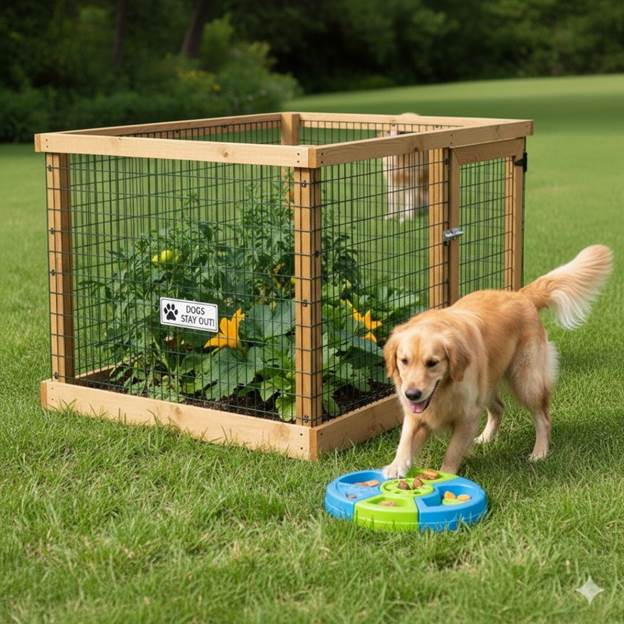
For the serious gardener, or for those with a particularly persistent and athletic dog, the ultimate solution is a full enclosure. This creates a walk-in “garden room” that is 100% secure. This can be a rewarding DIY project. For example, you can build a simple wooden frame with posts that are 6-7 feet tall. Then, you can stretch durable wire fencing (like chicken wire or hardware cloth) around the entire perimeter, from the ground up to the top. Most importantly, you’ll need to include a proper, self-latching gate so you can get in and out easily while ensuring the space remains secure. A full enclosure not only keeps your dog out but also provides excellent protection from other garden pests like rabbits and deer.
Level 3: Training and Enrichment (Addressing the Root Cause)
Often, a dog that is destructive in the garden is a dog that is simply bored. Digging and destructive chewing are natural canine behaviors. These behaviors are often amplified when a dog has too much pent-up physical or mental energy and not enough to do with it. Therefore, addressing the root cause is a crucial part of any humane solution.
A dog that is tired and mentally stimulated is far less likely to cause trouble in the first place. The techniques of positive redirection are your most powerful tool. For a full breakdown of these humane strategies, read our detailed guide: 7 Humane Ways to Stop Your Dog from Digging Up Flower Beds.
In addition to ensuring your dog gets enough walks and playtime, you should provide better alternatives in the yard itself. A designated digging box filled with sand where you’ve hidden toys can be a fantastic outlet. Also, having a rotation of durable outdoor chew toys or puzzle feeders can engage your dog’s brain and keep them focused on an approved activity, far away from your vegetable patch.
The Big Picture: A Garden Designed for Everyone
Protecting your vegetable patch is a key part of creating a truly harmonious backyard. This strategy of creating specific ‘yes’ and ‘no’ zones and establishing clear boundaries for different activities can be applied to your entire outdoor space. In fact, this approach can prevent many problem behaviors before they even start, leading to a more peaceful coexistence.
To learn how to integrate your protected vegetable garden into a complete, beautiful, and resilient yard with durable paths, dedicated play areas, and safe planting schemes, read our ultimate guide on how to design a garden layout that your dog won’t destroy.
Conclusion
As you can see, there is a layered approach to protecting your vegetable garden. You can start with simple deterrents and management techniques. However, the most effective and permanent solutions involve creating reliable physical barriers and ensuring your dog’s underlying needs for exercise and mental enrichment are being met.
Ultimately, you do not have to give up your dream of a bountiful, homegrown harvest just because you have a dog. By using the strategies in this guide, you can successfully protect your vegetables, keep your dog safe from harm, and create a beautiful garden space where everyone in your family—furry or not—can happily coexist.