By Adam Smith — Pet Landscaping & Outdoor Living Specialist
If you are tired of scrubbing muddy paw prints off your hardwood floors or staring at unsightly yellow urine burns across your lawn, you are not alone. Natural turf rarely survives the daily wear, running tracks, and acidic urine of active dogs.
Artificial pet turf solves both problems at once: it provides a vibrant, green outdoor space that eliminates mud and holds up against aggressive diggers. However, choosing the wrong synthetic grass can trap urine smells and turn your yard into an unbearable heat sink during summer.
In this practical guide, we break down the best artificial grass for dogs, highlighting drainage velocity, antimicrobial backings, blade durability, and the exact sub-base installation needed for a 100% odor-free yard.
Quick Comparison: Top Pet Turf Picks for 2026
| Product / Category | Best For | Pile Height | Drainage Rate | Antimicrobial Protection |
| PetGrow Pet-Specific Turf | High-Traffic Dogs | 1.18 inches | > 40 gal/hr/sq.yd | Yes (Built-in backing) |
| SunVilla Realistic Canine Grass | Natural Yard Aesthetic | 1.38 inches | > 35 gal/hr/sq.yd | Yes |
| LITA Heavy-Duty Pet Grass | Budget DIY Potty Areas | 1.0 inch | > 30 gal/hr/sq.yd | Standard hole-punched |
4 Critical Factors to Inspect Before Buying Pet Grass
Before ordering synthetic turf for your backyard, verify these four technical specifications:
1. 100% Permeable Hole-Punched Backing
Standard residential artificial turf is made for light decorative foot traffic. Dog turf requires maximum liquid drainage. Look for backings with punched drainage holes spaced every 3 to 4 inches or fully porous polyurethane grids capable of draining at least 30 to 45 gallons of water per hour per square yard.
2. Moderate Pile Height (1.0 to 1.3 inches)
While lush, 2-inch pile grass looks luxurious, it is difficult to clean. Solid dog waste sinks into tall blades, making daily scooping a chore. A pile height between 1.0 and 1.25 inches strikes the ideal balance between paw comfort and easy waste removal.
3. Antimicrobial Yarn Treatment
Urine bacteria break down into ammonia and uric acid crystals. Premium pet turfs integrate antimicrobial agents directly into the polyethylene or polypropylene fibers during manufacturing to inhibit bacterial growth and odor buildup.
4. Heat-Reduction Blade Technology
Synthetic fibers absorb solar heat faster than natural lawn blades. Choose turfs designed with ribbed, “W”, or “C” shaped blade profiles that reflect sunlight and stay 10% to 15% cooler on sunny afternoons.
In-Depth Reviews: The Best Dog-Friendly Turfs
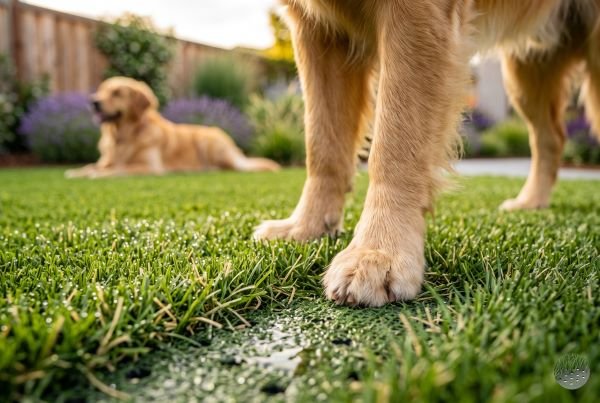
1. PetGrow Heavy-Duty Dog Artificial Turf (Top Overall Pick)
🐾 Top Pick: PetGrow Heavy-Duty Pet Artificial Grass
Ideal For: Backyards with medium-to-large active dogs who love sprinting and playing fetch.
- Blade Height: 1.18 inches (30 mm) for effortless scooping.
- Backing: Multi-layer rubber with rapid drainage punch-holes.
- Durability: UV-stabilized, non-toxic, and resistant to heavy claw friction.
PetGrow stands out for its realistic 4-tone blade structure and dense stitch rate. It feels soft under paw pads without collapsing flat when large dogs patrol the yard. Because the pile height is kept under 1.2 inches, you can run a standard yard rake or hose over it without dislodging fibers.
- Pros: Rapid liquid drainage, non-abrasive texture, excellent paw traction when wet.
- Cons: Requires silica sand or antimicrobial infill to keep edges securely weighed down.
2. SunVilla Realistic Pet Turf (Best Natural Aesthetic)
🌿 Best Aesthetic: SunVilla Premium Canine Grass
Ideal For: Homeowners who want their backyard to look identical to a pristine natural lawn.
- Blade Height: 1.38 inches with realistic brown thatch layer.
- Cooling: Reflective fiber technology keeps surface heat manageable.
- Drainage: High-volume vertical drainage channels.
SunVilla mimics fescue and bluegrass lawns by combining olive green and field green blades with a short thatch layer underneath. It creates a soft cushioning layer that aging dogs with joint issues appreciate during outdoor naps.
- Pros: Unmatched realistic look, flame-retardant, comfortable for lounging.
- Cons: Slightly longer pile requires more thorough weekly rinsing.
3. LITA Commercial Grade Pet Turf (Best Budget Solution)
💰 Budget Pick: LITA Commercial Artificial Turf
Ideal For: Designated potty pads, side runs, and balcony dog spaces.
- Blade Height: 0.8 to 1.0 inch low-profile design.
- Maintenance: Flushes clean with minimal water volume.
- Flexibility: Easily trimmed with a utility blade around fences and pavers.
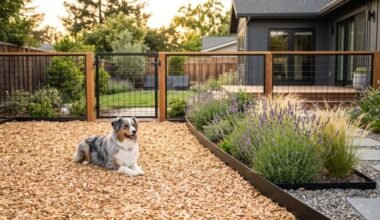
If you only need to cover a specific run or want to pair synthetic grass with gravel pathways as outlined in our dog-friendly garden without grass guide, LITA offers the most economical solution per square foot without sacrificing tensile strength.
How to Install Artificial Turf for Dogs So It Never Smells
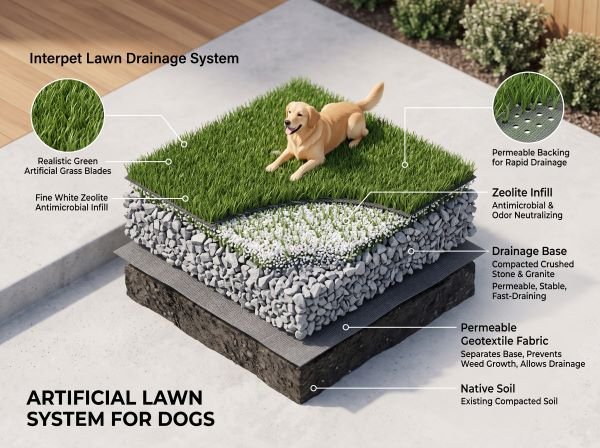
The secret to a successful pet lawn does not lie in the grass itself—it lies in what you place underneath it. If you install artificial turf directly on top of native clay dirt, urine will pool, stall, and create severe ammonia odors.
For a permanent odor-free installation, use this proven 4-layer foundation:
[ Layer 1: Top ]         ---> Pet-Specific Artificial Turf
[ Layer 2: Infill ]      ---> Antimicrobial Zeolite Infill (Neutralizes ammonia)
[ Layer 3: Base (2-3")]  ---> Compacted Crushed Granite / 3/8" Minus Gravel
[ Layer 4: Foundation ]  ---> Permeable Commercial Weed Barrier Geotextile
- Excavate Native Soil: Dig down 3 to 4 inches to remove grass, organic matter, and roots.
- Lay Heavy Geotextile Fabric: Prevents weeds from pushing up while allowing water to seep into the subsoil.
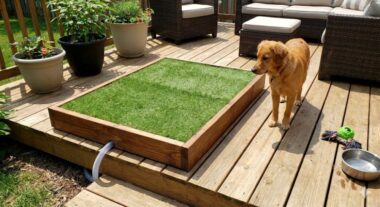
- Add Crushed Aggregate: Fill with 2 to 3 inches of crushed gravel or decomposed granite. Tamp and compact firmly with a slight 1% slope toward your yard’s drainage outlet. If building over a hard surface, review our step-by-step tutorial on building a dog potty on concrete with drainage.
- Spread Zeolite Infill: Brush organic zeolite or coated silica sand between the blades. Zeolite captures ammonium ions, preventing them from turning into gas until natural rain flushes them away.
Maintenance & Weekly Cleaning Routine
Keep your synthetic dog lawn fresh with this 3-step schedule:
- Daily: Pick up solid waste promptly using a pooper scooper.
- Weekly: Spray down heavily used potty areas with a standard garden hose nozzle to flush out residual liquids.
- Monthly: Apply an outdoor bio-enzymatic turf deodorizer to break down embedded uric acid crystals within the aggregate base.
Frequently Asked Questions
Does artificial grass get too hot for dogs’ paws?
Yes, synthetic grass gets warmer than natural lawns on hot sunny days. During peak summer heat, test the surface with the back of your hand. If it feels hot, spray it down with cold water for 60 seconds (which drops surface temperature immediately) or ensure your yard incorporates shade sails and dog-safe canopy shrubs.
Will dogs try to dig through artificial grass?
Most dogs stop digging once turf is properly installed because they cannot smell open soil beneath the heavy backing. Securing seams with 6-inch galvanized landscape staples every 4 inches along fence perimeters prevents curious chewers from pulling up edges.
Is artificial grass safe for puppies?
High-quality dog turf is 100% non-toxic, lead-free, and PFAS-free. Always confirm with the manufacturer that their products meet international non-toxicity standards.