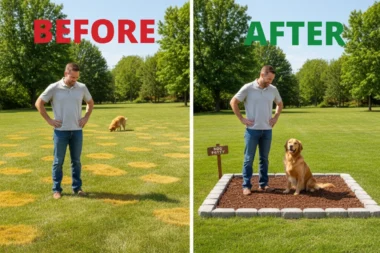
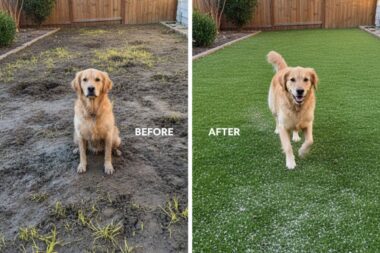
Tired of wiping dripping, muddy paws every time your dog sprints inside from a destroyed, soupy lawn? You are facing a universal canine homeowner dilemma: standard turfgrass and active dogs simply cannot coexist in wet weather. Heavy canine foot traffic strips delicate grass blades, collapses soil porosity, and leaves standing water that turns your backyard into an endless indoor cleaning emergency.
The absolute best alternative to grass for dogs in a muddy yard is a permeable hybrid system. By pairing high-drainage surface materials—such as engineered cedar wood mulch, compacted decomposed granite, or pet-grade artificial turf—over a non-woven geotextile drainage membrane, you permanently isolate canine paws from sticky subsurface clay.
In this architectural field guide, we examine the physics of backyard mud, evaluate the top four lawn alternatives, provide a step-by-step DIY installation blueprint, and reveal maintenance secrets for a 100% mud-free, odor-free property.
The Hidden Science: Why Dogs Turn Grassy Lawns into Mud Pits
To eliminate backyard mud permanently, you must first understand the mechanical forces causing it. Mud is not merely the result of rainfall; it is an engineered failure of your soil structure driven by canine biomechanics.
When a 50-pound dog accelerates, leaps, or makes high-speed corner pivots, its paw pads exert high localized shear force. Unlike flat human shoe soles, dog paws feature specialized digital pads and non-retractable claws. These claws act like mechanical rototillers, shearing turfgrass crowns and slicing through the delicate root matrix.
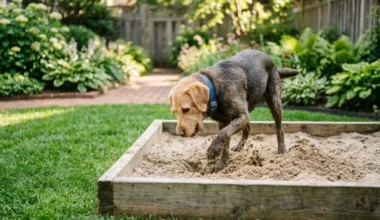
Once grass cover thins, direct paw impact crushes soil aggregates, destroying essential macropores—the tiny subterranean channels responsible for gravity drainage and oxygen exchange. As illustrated in our deep-dive into dog-friendly landscaping for diggers and runners, heavy compaction transforms healthy, permeable loam into an impermeable clay hardpan. Water can no longer infiltrate the subsoil, creating stagnant, bacteria-laden surface puddles that coat your dog’s paws in liquid mud.
Top 4 Alternatives to Grass for Dogs in Muddy Yards
Replacing turfgrass requires choosing a surface that withstands claw friction, drains torrential downpours rapidly, and remains non-toxic if sampled by curious chewers. Below are the four highest-performing ground cover alternatives.
Option 1: Engineered Cedar Wood Mulch (Best Budget Solution)
Engineered cedar wood mulch consists of debarked, uniform wood chips processed specifically for public playgrounds and landscape paths. Unlike raw shredded tree-trimming waste or bark mulch, engineered cedar chips interlock under foot pressure, creating a stable, springy walking mat that does not cling to fur.
- Drainage & Permeability: Wood chips possess high void space, allowing stormwater to flush instantly past the paw surface into the aggregate subgrade.
- Natural Antimicrobial Oils: Cedarwood naturally produces thujone and aromatic resin compounds that repel fleas, ticks, and soil pathogens while masking organic pet odors.
- Toxicity Warning: Never substitute cedar with ornamental cocoa mulch. As warned by the ASPCA Animal Poison Control Center, cocoa bean shell mulches contain dangerous theobromine concentrations that are toxic and potentially fatal if ingested by dogs.
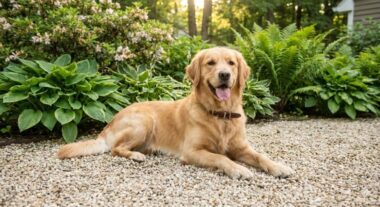
Option 2: Decomposed Granite (DG) with Stabilizer (Best for Diggers & High-Traffic Runs)

Decomposed granite consists of weathered, fine granitic rock particles blended with minute aggregates. When blended with a plant-based organic binder and compacted, DG cures into a dense, semi-porous crust resembling a firm desert trail.
Compacted DG is virtually indestructible. Powerful dogs cannot claw through it into muddy subsoil, making it the premier choice for fence-line perimeter paths. However, unsealed DG can track dusty granite fines onto indoor hardwood floors during rain. To avoid indoor scratching, combine DG with perimeter paving stones or consult our design guide on budget-friendly DIY dog garden paths.
Option 3: K9-Grade Synthetic Turf (The Ultimate Zero-Mud Luxury)
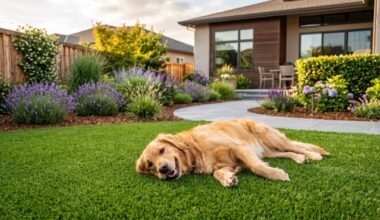
If you demand the pristine green look of an English lawn without maintenance headaches, modern pet-specific artificial grass is unmatched. Commercial pet turf differs drastically from cheap big-box artificial grass:
- High-Flow Drainage Backings: Premium canine turfs utilize hole-punched polyurethane backings or porous knitted grids that drain liquid at rates exceeding 40 gallons per hour per square yard.
- Short, Resilient Pile: Shorter blades (1.0 to 1.25 inches) prevent solid waste from sinking into deep fibers, allowing effortless morning scooping.
- Thermal Considerations: While synthetic turf completely eliminates mud, blades can heat up under direct summer sun. Pair your turf layout with outdoor shade canopies and review our tested recommendations for the best artificial grass for dogs and backyard drainage to ensure you choose UV-reflective, cool-blade yarn.
Option 4: Micro-Clover (Trifolium repens) (Best Living Green Lawn Alternative)
For dedicated gardeners who refuse hardscaping and insist on a living lawn, conventional bluegrass or fescue must be replaced with micro-clover. Micro-clover is a dwarf selection of Dutch white clover featuring miniature leaves and a dense, creeping growth habit.
Micro-clover establishes deep, branching taproots that physically break up compacted clay soil, restoring natural water infiltration. Crucially, clover is a nitrogen-fixing legume; it absorbs atmospheric nitrogen and thrives on dog urine without developing the unsightly yellow chemical burn rings typical of grass lawns. Learn how to overseed and protect living ground covers during zoomies in our review of 5 dog-safe ground covers that survive heavy traffic.
Architectural Comparison: Costs, Durability & Drainage

Compare the initial investment, maintenance requirements, and performance characteristics of each lawn alternative in the specification matrix below:
| Ground Solution | Material Cost (sq. ft.) | Expected Lifespan | Drainage Speed | Paw Comfort Level | Maintenance Required |
|---|---|---|---|---|---|
| Engineered Cedar Mulch | $1.50 – $3.00 | 2 – 3 Years | Rapid Cross-Flow | High (Cushioned) | Annual top-off rake |
| Compacted Decomposed Granite | $3.00 – $6.50 | 7 – 10 Years | Fast Gravitational | Moderate (Firm) | Occasional leveling rake |
| K9 Pet-Grade Synthetic Turf | $8.00 – $14.00 | 10 – 15 Years | Maximum Permeability | High (Clean & Soft) | Weekly enzymatic rinse |
| Living Micro-Clover | $0.40 – $1.00 | Perennial Self-Seeding | Moderate Biological | Maximum (Lush) | Monthly mowing & overseeding |
Step-by-Step DIY Installation Blueprint for a Mud-Free Yard

No surface material will resolve your mud problem if dumped over poorly prepared soil. Follow this 5-step engineering process to build a drainage sub-base that prevents mud pumping permanently:
- Excavate Subgrade to Depth: Strip 3 to 4 inches of compromised mud and topsoil across the target area using a flat square spade. Grade the sub-base with a 1.5% to 2% fall directed away from your home’s foundation or toward a designated yard drain.
- Compact Native Subsoil: Run a mechanical plate compactor or heavy cast-iron hand tamper across the clay subgrade to create a solid foundation. If building over patios or restricted spaces, review our specialized guide on building a DIY dog potty area on concrete with drainage.
- Roll Out Non-Woven Geotextile Membrane: Lay down a 4-ounce to 6-ounce non-woven polypropylene geotextile fabric directly over the compacted soil. This permeable membrane acts as a physical separator: it permits water to filter downward while preventing wet clay mud from pumping up into your clean surface aggregate. Overlap all fabric seams by 12 inches and secure with 6-inch steel landscape staples.
- Install Rigid Border Containment: Anchor commercial steel, composite, or pressure-treated timber edging along the yard perimeter. Drive 10-inch spiral spikes every 24 inches. Edging prevents dogs from dislodging mulch or gravel into flower beds during vigorous running.
- Spread Surface Layer & Compact: Distribute a uniform 3-inch layer of engineered cedar chips or decomposed granite. Tamp firmly to lock the material into a stable, interlocking matrix.
Zone Architecture: The Secret to Long-Term Yard Survival
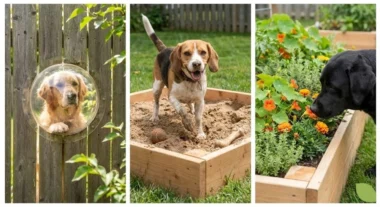
Rather than converting your entire property to a single material, successful landscape architects divide pet yards into tactical activity zones. For an in-depth breakdown of full-property spatial planning, explore our blueprint on creating a dog-friendly garden without grass.
- The Fence Patrol Run: Dogs run repetitively along fence perimeters to track neighborhood sights and sounds. Lay a 24-inch wide strip of decomposed granite or cedar mulch here to absorb high-impact paw strikes.
- The Potty & Rest Sanctuary: Direct bathroom habits to an isolated, gravel-lined potty station equipped with odor-neutralizing zeolite. Explore our blueprint on how to design a dedicated dog potty zone to safeguard rest zones.
- The Protected Botanical Buffer: Border garden areas with durable, dog-safe perennials and fragrant herbs. Avoid toxic ornamental varieties like Hostas, and cross-reference our field guide to 10 dog-safe culinary herbs for home gardens.
Long-Term Maintenance: Preventing Odors & Material Loss
Even the most durable hardscapes require routine stewardship to maintain optimal drainage velocity and eliminate bacteria:
- Weekly Sanitization: Rinse high-traffic urination spots thoroughly with a garden hose nozzle. Apply an outdoor bio-enzymatic spray once a week to dissolve uric acid crystals trapped within organic mulch or aggregate fines.
- Bi-Weekly Redistribution: Use a spring-tine landscape rake to smooth out displacement hollows near gateway entrances and fence turns where dogs pivot during fetch.
- Annual Mulch Replenishment: Engineered wood mulches naturally break down at a slow rate of 10% to 15% annually. Top off your layout every spring with a fresh 1-inch layer of clean cedar chips to renew paw cushioning and aromatic weed suppression.
Frequently Asked Questions
Will cedar mulch splinter or hurt dog paw pads?
No, provided you use engineered cedar wood chips rather than raw shredded bark or demolition pallets. Engineered landscape wood chips are machine-tumbled and debarked, leaving rounded, blunt edges that compact into a smooth, springy carpet gentle on canine paw pads.
Is decomposed granite safe if my dog licks its paws?
Yes. Decomposed granite is 100% natural pulverized rock free of chemical toxins. However, to prevent sharp grit from catching in paw crevices and tracking indoors, choose screened decomposed granite stabilized with natural organic binders.
Why did my previous mulch lawn turn into a muddy swamp?
Mulch fails whenever it is poured directly onto raw clay without a geotextile membrane. Without this critical separation barrier, canine paw pressure forces wood chips down into the wet clay while pushing muddy slurry upward, ruining the surface in a single rainy season.
Transform Your Mud Pit into a Durable Canine Haven
You do not have to accept muddy paw prints and destroyed lawn turf as the inevitable price of dog ownership. By excavating your mud-compromised topsoil, installing a permeable geotextile barrier, and dressing the surface with engineered cedar chips, decomposed granite, or pet turf, you create an outdoor space that stays clean in all weather.
Now over to you: What does your dog’s favorite running track look like right now? Share your yard layout challenges in the comments below, and let’s engineer a mud-free solution together!