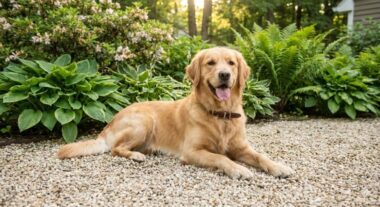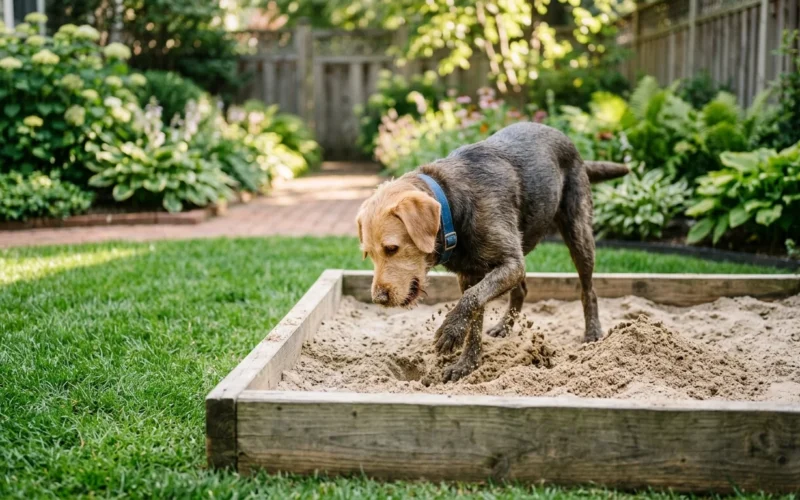
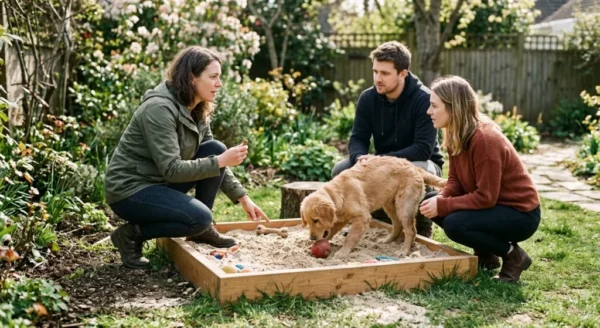
If you want to end lawn destruction for good, building a dedicated dog digging sandbox is the ultimate backyard solution. Does your yard currently resemble an active minefield of craters, torn turf, and exposed irrigation lines? You are not dealing with a spiteful pet; you are witnessing an unchanneled biological drive. Dogs dig for deeply ingrained evolutionary reasons, ranging from cooling off and caching prey to territorial scent marking and sheer boredom. Shouting across the patio rarely stops this behavior. In fact, yelling usually spikes your dog’s stress levels and redirects their paws toward your delicate flower beds.
The smartest, science-backed approach does not fight your dog’s natural urges—it redirects them. Constructing an enriching dog digging sandbox provides a dedicated sensory outlet where your pup can dig freely without getting into trouble[cite: 1]. By transforming raw drive into structured playtime, a proper digging pit protects your delicate lawn and safeguards your landscape investments. Below is your comprehensive, step-by-step blueprint to designing, building, sanitizing, and training your dog to use their own personal digging zone.
Why Your Yard Needs a Dedicated Dog Digging Sandbox
Canine behaviorists break lawn excavation down into several distinct patterns: temperature control, prey drive, scent foraging, displacement anxiety, and excess energy. Working breeds with thick double coats often scoop out topsoil to expose cool, damp earth during hot afternoons. At the same time, high-drive terriers and scent hounds follow underground critters along plant root systems.
Trying to stop this instinct through punishment creates frustration. When a dog has no outlet for a natural urge, stress quickly boils over into fence barking, door pacing, or destructive chewing. Providing a designated dog digging sandbox establishes healthy boundaries through smart yard design. When you pair this space with a thought-out dog-friendly garden layout, you clearly show your dog where play is welcomed and where your prized plants remain strictly off-limits[cite: 2].
Step 1: Choose the Right Materials and Dimensions for Your Dog Digging Sandbox
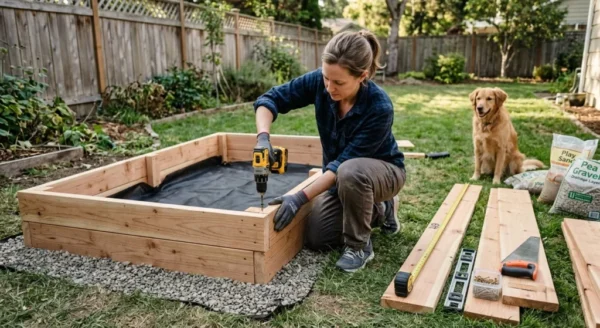
The durability, safety, and cleanliness of your outdoor digging pit depend on smart framing materials and proper ground preparation. Cutting corners on timber selection or skipping the foundation leads to rotted boards, foul mud puddles, and potential health hazards for your pet.
Lumber Selection: Safe vs. Toxic Timber
Avoid standard pressure-treated lumber (PT lumber). Manufacturers treat these boards with harsh chemical biocides and copper compounds to deter rot. Because dogs regularly lick damp paws and chew on wooden box borders, toxic chemicals have no place in their play zone.
Instead, choose rot-resistant timber naturally for your project:
- Western Red Cedar: Naturally resistant to rot and pest damage, long-lasting, and completely non-toxic if chewed.
- Redwood: Stands up exceptionally well to moist ground contact without needing synthetic chemical sealants.
- Heat-Treated Lumber (HT Stamp): Kiln-dried boards that deliver structural strength without chemical off-gassing.
- Composite or HDPE Plastic Lumber: An ultra-durable, zero-maintenance alternative that will never splinter, rot, or absorb pet urine.
Sizing Matrix by Breed & Depth Requirements
A cramped box frustrates active dogs and pushes them back onto your lawn. Conversely, an oversized pit in a compact yard is tricky to manage and cover. Size the frame to match your dog’s physical build:
| Dog Classification | Typical Weight | Recommended Frame Footprint | Minimum Pit Depth |
|---|---|---|---|
| Toy & Small Breeds (Yorkies, Dachshunds, Pugs) | Under 25 lbs | 3 ft × 3 ft to 4 ft × 4 ft | 10 to 12 inches |
| Medium Breeds (Beagles, French Bulldogs, Aussies) | 25 – 55 lbs | 4 ft × 4 ft to 5 ft × 5 ft | 14 to 16 inches |
| Large Breeds (Labradors, Golden Retrievers, Boxers) | 55 – 85 lbs | 6 ft × 6 ft | 18 to 20 inches |
| Giant & Heavy Burrowers (Mastiffs, Huskies, Shepherds) | 85+ lbs | 7 ft × 7 ft or larger | 20 to 24 inches |
Excavation and Drainage Engineering for Your Dog Digging Sandbox
Never place your dog digging sandbox directly on flat grass or unprepared soil. Without proper drainage, rain will quickly turn the sand into a stagnant mud pit that harbors bacteria and ruins your dog’s coat.
- Excavation: Outline the target area with chalk or string. Excavate grass and topsoil roughly 4 inches deeper than your planned wooden frame depth.
- Gravel Layer: Spread a 2- to 3-inch base layer of washed 3/4-inch crushed gravel. This open sub-base directs excess rain away into the ground below.
- Landscape Fabric: Roll heavy-duty, permeable landscape geotextile over the gravel and run it up the interior walls. Fasten it securely with landscape staples. This lets rainwater drain out while stopping sand from sinking into the stone layer.
- Frame Assembly: Assemble your timber border using coated, exterior-grade deck screws. Position the box over the prepared base, verify it sits level, and backfill around the exterior edges with dirt to secure it firmly in place.
Step 2: Source Safe Play Sand (Prevent Respiratory Hazards)
Your choice of filling material directly impacts your pet’s respiratory health. Buying cheap, unrefined sand from an industrial quarry can trigger serious eye injuries and chronic airway trouble.
The Danger of Free Crystalline Silica Dust
Never use basic builder’s sand, masonry sand, or crushed quarry limestone in your yard project. These construction materials contain high concentrations of fine crystalline silica dust. When dogs dig enthusiastically, their noses stay close to the ground, and their rapid panting draws microscopic mineral particles straight into their lungs.
Inhaling crystalline silica repeatedly causes silicosis—a chronic, irreversible lung inflammation that creates scar tissue and leaves pets prone to persistent coughing and fatigue. Additionally, sharp, jagged masonry particles can cause painful eye abrasions when kicked up during energetic play sessions.
Certified Safe Sand: What to Fill Your Sandbox With
Always fill your dog digging sandbox with certified, double-washed children’s play sand. This material undergoes thorough screening to remove dust fines, leaving behind rounded, smooth grains that stay gentle on paw pads and snouts.
- Natural Alluvial River Sand: Naturally tumbled by running water, dust-free, and soft on sensitive paws.
- Calcium Carbonate Sand: A clean, non-silica option that breaks down safely without sharp mineral dust.
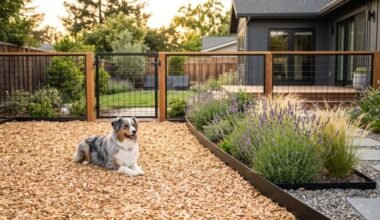
- Clean Wood Chip Alternatives: If you prefer to avoid tracking sand indoors, consider smooth, playground-certified engineered wood fiber (EWF) or clean cedar chips, provided your pet does not swallow wood.
To keep the surroundings clean and prevent bare muddy spots, surround the box perimeter with resilient dog-safe ground covers that withstand heavy paw traffic[cite: 2].
Step 3: Positive Reinforcement and Yard Redirection Training
Building a quality box is only half the job. Your dog currently views your manicured turf and garden soil as their favorite playground. Guiding them toward their new spot requires patient, positive redirection.
How to Train Your Pet to Use the Dog Digging Sandbox Exclusively
Spend 10 to 15 minutes each day practicing this simple 3-stage routine:
- Stage 1: Build Excitement (Days 1–4): Avoid forcing your dog into the box. Instead, walk them over on a loose leash and scatter delicious treats or safe chews across the sand surface. When they step inside to snack, mark the moment with enthusiastic praise (“YES!”) and offer an extra reward right between their paws.
- Stage 2: Spark the Hunt (Days 5–9): In plain sight of your dog, take an exciting toy or dental bone, place it in the center, and cover it lightly with sand so a corner stays visible. Use a playful cue like “Find it!” As soon as their paws scrape the sand to grab the treasure, celebrate with lots of praise. Gradually bury the items deeper as their confidence grows.
- Stage 3: Reward Good Choices (Days 10–14): Let your dog explore the yard while you supervise calmly from a distance. The moment they walk past your lawn and enter their dog digging sandbox on their own, reward them immediately with treats or an energetic game of tug.
Handling Relapses Without Confrontation
If you spot your dog breaking ground in forbidden grass, stay relaxed. Rushing over and shouting usually sounds like high-energy excitement, turning the digging into an entertaining chase game.
Instead, make a cheerful recall sound or whistle. Once your pup looks up and jogs over, casually walk them over to their sandbox and invite them to dig for buried treasures there instead. If garden digging is an old habit, combine this setup with proven humane strategies to stop digging in flower beds[cite: 2]. You can also use temporary border fencing when learning how to protect your vegetable garden from your dog[cite: 2]. Working with these principles fits perfectly into holistic dog-friendly landscaping ideas that honor your pet’s personality[cite: 2].
Step 4: Sanitation, Parasite Control, and Dog Digging Sandbox Covers
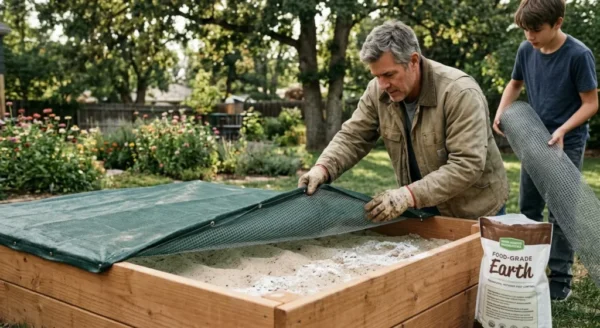
An uncovered dog digging sandbox can quickly turn into an outdoor litter box for neighborhood cats and wildlife. Without routine maintenance, accumulated rain, wild droppings, and rotting leaves create unhygienic conditions that threaten your pet’s well-being.
Pathogen Vulnerabilities & Parasite Risks
Cat feces carry dangerous parasites like Toxoplasma gondii, roundworms, and hookworms. If outdoor cats use the sandbox, these microscopic parasite eggs linger in damp sand for months. Dogs that unearth these messes risk intestinal issues or skin irritations on their paws.
Standing moisture also makes wet sand a prime habitat for mold, mildew, and bacteria. The American Kennel Club points out that damp play surfaces frequently lead to paw pododermatitis and fungal irritations. If you struggle with backyard sanitation overall, pairing your sandbox with a separate designated dog potty area will keep bathroom habits and play habits cleanly separated[cite: 2].
Choosing the Right Protective Cover
Avoid thin plastic sheeting held down by loose bricks; high winds will whip it off, and stray animals can easily squeeze underneath. Use one of these two proven methods:
- Slotted Cedar Lid: Build a sturdy wooden cover using 1×4 cedar slats spaced slightly apart. The wooden weight blocks cats while allowing trapped ground moisture to evaporate naturally under warm sunlight.
- Fitted Weatherproof Marine Tarp: Order a heavy-duty, waterproof canvas or vinyl cover fitted with corner grommets and secure it with bungee cords attached to exterior hooks on your frame.
Maintenance and Sanitation Schedule
Keep your dog digging sandbox clean and fresh by following this simple routine:
| Frequency | Action Item | Methodology |
|---|---|---|
| Daily | Quick Debris Sweep | Rake off fallen leaves, sticks, and windblown litter. |
| Weekly | Sifting and Aerating | Run a fine-mesh garden sifter through the sand to catch hair, clumps, and buried debris. |
| Monthly | Sanitizing Rinse | Drench the sand with a safe solution of diluted white vinegar (1 part vinegar to 4 parts water), then rake and let it bake dry in direct sunlight. |
| Annually | Fresh Sand Refresh | Empty the old sand, inspect the drainage fabric underneath, clean the frame, and fill with fresh play sand. |
Step 5: Load with Mental Enrichment (Canine Scent Targets & KONGs)
Plain sand becomes boring after a few weeks. To keep your dog hooked on their dog digging sandbox rather than returning to your grass, turn the box into a stimulating puzzle hub. Scent-tracking challenges burn off mental energy much faster than basic walking or backyard pacing alone.
Engaging Scent Games and Olfactory Challenges
Working their nose triggers deep cognitive satisfaction and taps into ancestral foraging drives:
- Perforated Scent Tubes: Drill small breathing holes in short PVC pipes with screw-on caps. Place aromatic treats or dried meat inside and bury them 6 inches deep to challenge your dog’s tracking ability.
- Herbal Scent Pouches: Hide small breathable pouches stuffed with fragrant, dog-safe herbs for your garden like rosemary, chamomile, or valerian root[cite: 2]. Unearthing these offers wonderful sensory enrichment.
Safe Toy Selection for Sandy Play
Skip standard fuzzy tennis balls and fabric squeakers in the sand pit. Gritty sand sticks to fuzzy fabrics like sandpaper, wearing down canine tooth enamel over time. Furthermore, brittle plastics can crack and cause serious choking risks.
Stick to heavy-duty vulcanized rubber chew toys. Pack durable rubber cones with canned food, pure pumpkin, or natural peanut butter, freeze them solid, and bury them at varying depths. As your dog digs them out, long licking sessions release calming hormones that lower stress. If your pup chews aggressively, equip the box with proven gear from our vetted list of indestructible outdoor dog toys built to withstand sharp teeth and abrasive sand[cite: 2].
Troubleshooting Common Dog Digging Sandbox Challenges
Even the most careful backyard projects encounter occasional hitches. Here is how to fix the three most common setup issues:
Issue 1: The Dog Ignores the Box and Continues Digging Elsewhere
This usually comes down to heat and placement. Dogs avoid digging in hot, sunbaked sand during midday. If your box sits under relentless sun, your dog will look for cool garden soil under shaded trees instead. Move the sandbox into natural shade or mount a 90% UV-blocking shade sail overhead. If the box is already cool, make the rewards more enticing: use warm, fragrant bacon bits or liver treats buried near the surface to recapture their curiosity.
Issue 2: The Dog Tracks Gritty Sand Indoors Across Living Room Rugs
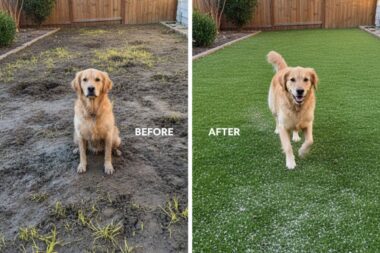
Long-haired breeds easily collect sand between their paw pads and leg feathers. Fix this by adding a practical transition path between the box and your back door. Install a 4-foot runway of artificial grass, or lay down clean paver stones using our DIY dog-friendly garden path ideas[cite: 2]. The textured path spreads paw pads and shakes loose sand before your pup steps onto the patio. For yards struggling with chronic wet dirt, check out our guide on creating a dog-friendly garden without grass to eliminate mud entirely[cite: 2].
Issue 3: Rainstorms Leave the Sandbox Soaked and Muddy
If your sandbox stays saturated long after storms pass, your bottom drainage is blocked. This happens when cheap fabric tears, allowing mud to seep upward into the sand, or when the gravel layer is too shallow. Shovel out the wet sand, check your fabric liner for rips, expand the crushed stone bed to at least 3 inches, and line it with strong, permeable geotextile before refilling with fresh sand.
Frequently Asked Questions
How deep should a dog digging sandbox be?
A dog digging sandbox should measure between 12 and 18 inches deep for small to medium breeds, and 18 to 24 inches for larger working breeds or deep-burrowing terriers. This depth gives your dog plenty of room to dig satisfying holes without constantly hitting or tearing the protective drainage fabric underneath.
Is play sand safe for dogs to dig in?
Yes. Washed, non-toxic children’s play sand is safe for dogs. It goes through a thorough washing and filtering process to strip out dangerous crystalline silica dust and features smooth, rounded edges that protect paw pads from scrapes and prevent corneal eye irritation.
How do I keep feral and outdoor cats out of my dog’s sandbox?
Keep cats out by securing the sandbox with a slotted cedar wooden lid or a fitted, heavy-duty 600D marine tarp fastened with tight bungee cords whenever your dog is not actively playing. Outdoor cats will only use loose, uncovered sand as a litter box when it is easily accessible.
What is the best wood to use for an outdoor dog digging box?
Untreated western red cedar and natural redwood are the premier lumber choices. Both wood species naturally resist rot, moisture, and boring insects for years without requiring the toxic copper compounds or chemical biocides used in standard pressure-treated lumber.
Can dogs eat play sand, and what should I do if they swallow some?
Dogs should never ingest sand. While a few accidental grains swallowed during toy retrieval will pass through the digestive tract harmlessly, consuming large quantities of sand causes sand impaction—a life-threatening gastrointestinal blockage that requires emergency veterinary surgery. If your dog compulsively eats sand, stop using sand immediately and switch the substrate to large, pet-safe wood nuggets or safe mulch fibers.